

High Strength Welded Mesh and Where to Buy Cattle Fencing
Securing livestock and reinforcing infrastructure requires a strategic balance between material strength and installation efficiency. For professionals looking to buy cattle fencing or high-strength reinforcement systems, the choice of mesh determines the long-term stability of the containment or structure. Whether dealing with the high-pressure environments of coal mine support or the perimeter requirements of agricultural estates, the structural integrity of the welding process is paramount. By utilizing advanced carbon steel or stainless steel options, operators can significantly reduce material waste and accelerate project timelines without compromising on safety.
Modern engineering demands products that can withstand seismic stress and prevent cracking. Our specialized reinforcing mesh solutions focus on uniform force distribution and superior bonding with concrete, making them essential for highway pavements, bridge decks, and tunnel linings. By integrating ribbed or smooth steel rods with precise welding, we provide a robust framework that ensures durability in the most demanding industrial and agricultural environments.

Engineering the Core: Technical Advantages of Welded Reinforcing Mesh
The effectiveness of welded steel mesh lies in its structural rigidity and the precision of its intersections. Unlike traditional tied rebar, the longitudinal and transverse bars in our reinforcing mesh are firmly welded, creating a stable grid that prevents shifting during concrete pouring. This stability is critical for earthquake resistance and crack prevention, as the mesh ensures that forces are evenly transmitted across the entire surface area of the slab or wall.
From a resource management perspective, utilizing pre-fabricated mesh sheets offers a significant advantage in material consumption. Engineering data suggests that the use of optimized reinforcing mesh can reduce steel bar consumption by up to 30%. Because the wire diameter is accurate and the mesh remains flat, there is virtually no processing loss upon arrival at the construction site, allowing for immediate deployment.
- Seismic Performance: Enhanced resistance to ground movement and structural shifts.
- Precision Welding: Firm bonding between bars to maintain geometric integrity.
- Material Efficiency: Significant reduction in on-site cutting and waste.
- Surface Consistency: Flat, even surfaces that improve the finish of concrete applications.

Operational Efficiency and Construction Speed Optimization
In large-scale infrastructure projects, the construction period is often the most volatile cost factor. The implementation of prefabricated reinforcing mesh fundamentally transforms the workflow by eliminating the need for manual on-site cutting, placing, and binding of individual bars. Once the mesh is laid according to the engineering specifications, concrete can be poured directly, which typically saves between 50% to 70% of the traditional installation time.
This acceleration is particularly beneficial in high-traffic environments like highway pavement and bridge renovation. For instance, when refurbishing old bridge decks, the speed of deployment minimizes traffic disruption while the high strength of the mesh prevents the bridge piers from cracking under load. The result is a smoother deck surface and a significantly lower total engineering cost.
Furthermore, the ability to customize mesh width and length (up to 12,000 mm) means that fewer joints are required across a project area. Fewer joints equate to fewer potential points of failure, enhancing the overall lifespan of the concrete structure and reducing long-term maintenance requirements.
Critical Application Scenarios: From Highways to Tunnel Linings
The versatility of high-strength welded mesh allows it to be deployed across diverse engineering sectors. In highway pavement cement concrete engineering, adherence to strict industry standards is mandatory. Our mesh supports configurations where the distance between bars is kept under 20cm to 30cm, ensuring a reinforcement protective layer of at least 5cm, which is essential for preventing road surface degradation.
Tunnel lining presents a different set of challenges, primarily involving shear resistance and the prevention of local stone falls. The integration of reinforcing mesh into shotcrete improves punching resistance and bending strength. By maintaining a strategic distance between steel wire meshes (typically no less than 6cm), engineers can create a safe, durable lining that protects both the infrastructure and the operators within the tunnel.
Beyond these, the mesh is widely used in municipal bridges and coal mine support systems. In mining, the special reinforcing mesh provides the necessary stability to withstand geological pressure, preventing collapses and ensuring the safety of the underground workforce. The combination of galvanized surface treatments and high-grade carbon steel ensures that these products resist corrosion even in damp, acidic environments.
Technical Specifications for Reinforcing Steel Mesh
| Specification Item | Available Range / Value | Material Options | Application Suitability |
|---|---|---|---|
| Steel Rod Diameter | 3 mm – 40 mm | Carbon / Stainless Steel | Heavy Duty Infrastructure |
| Distance Between Rods | 100 – 500 mm | Ribbed or Smooth | Pavement & Bridge Decks |
| Mesh Sheet Width | 650 – 3800 mm | Galvanized Finish | Tunnel & Wall Lining |
| Mesh Sheet Length | 850 – 12000 mm | Corrosion Resistant | Industrial Flooring |
| Standard Sizes | 2x4m, 3.6x2m, 4.8x2.4m | High Strength Grade | Municipal Engineering |
Procurement Considerations for Industrial Mesh Systems
When evaluating suppliers for large-scale metal mesh projects, procurement managers must look beyond the initial price per sheet. The total cost of ownership is influenced by the precision of the weld, the consistency of the wire diameter, and the quality of the surface treatment. Poorly welded mesh can lead to structural shifts during concrete pouring, which results in costly repairs and compromised safety standards.
Customization is another critical factor. A professional design team can optimize the mesh configuration to match the specific load-bearing requirements of a project. Whether it is adjusting the rod style from smooth to ribbed for better concrete bonding or modifying the mesh opening shape from square to rectangular, these adjustments can further optimize material use and project strength.
Reliability in the supply chain is equally important. Partnering with a manufacturer that possesses comprehensive workshops—including dedicated welding, powder coating, and stamping facilities—ensures complete control over the product quality. This vertical integration allows for shorter construction periods and guaranteed adherence to international certification documents.
Future Trends in Metal Reinforcement and Containment
The industry is moving toward increasingly specialized alloy coatings and automated welding processes to enhance durability and precision. We are seeing a shift toward "smart" reinforcement where mesh configurations are digitally modeled to provide maximum strength at minimum weight, further reducing the carbon footprint of concrete construction.
Moreover, the integration of high-performance galvanized coatings is extending the service life of fences and reinforcing meshes in aggressive environments, such as coastal regions or industrial chemical zones. The focus is shifting from simple containment to long-term structural resilience.
For those who need to buy cattle fencing or industrial reinforcement, the trend is toward modularity and rapid-deployment systems. The ability to receive a product that requires zero on-site processing is becoming the industry standard, driving the demand for higher precision in the manufacturing phase and more robust logistics for oversized mesh sheets.
Frequently Asked Questions on Reinforcing Steel Mesh
What is the primary difference between ribbed and smooth steel rods in reinforcing mesh?
Ribbed rods are designed with surface protrusions that significantly improve the mechanical bond between the steel and the concrete, preventing slippage. Smooth rods are typically used in applications where specific sliding properties are required or in lighter-duty structural roles.
How much material can be saved by using welded mesh instead of traditional rebar?
Based on actual engineering experience, using prefabricated reinforcing mesh can reduce steel bar consumption by approximately 30% due to the elimination of overlapping waste and precise factory-controlled spacing.
Can the mesh be customized for specific engineering projects?
Yes, customized services are available for various engineering projects. This includes adjustments to the rod diameter (3-40mm), distance between rods (100-500mm), and overall sheet dimensions to fit specific structural requirements.
What makes the reinforcing mesh suitable for tunnel lining?
The mesh improves the shear, punching, and bending resistance of shotcrete. This prevents local stones from falling and reinforces the overall stability of the tunnel arch against geological pressure.
How does prefabricated mesh affect the construction timeline?
It significantly accelerates progress by removing the need for on-site cutting and manual binding. This typically results in a time saving of 50% to 70% during the reinforcement phase of construction.
Is the mesh resistant to corrosion in damp environments?
Yes, the use of galvanized surface treatments and the option for stainless steel materials ensure that the products are corrosion-resistant and have a long service life even in humid or industrial settings.
Technical References and Industry Standards
- ASTM International Standards for Steel Reinforcement
- ISO Standards for Welded Steel Wire Mesh
- American Concrete Institute (ACI) Reinforcement Guidelines
- Eurocode 2: Design of Concrete Structures
Selecting the right reinforcing mesh is a critical decision that impacts the safety and longevity of any structural project. By prioritizing high-strength materials and precise manufacturing, you ensure a project that is both cost-effective and durable.
Related Industrial Mesh Solutions

High Quality Durable Wholesale Woven Wire Fence Solutions
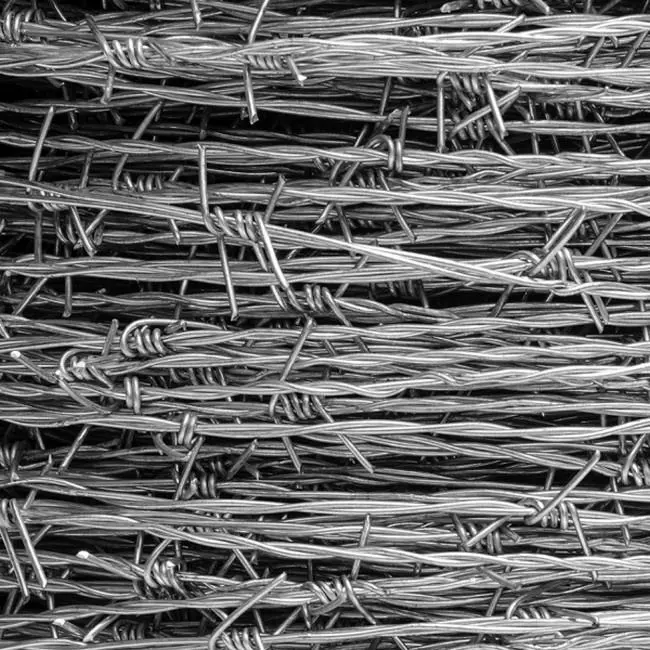
custom order Double Strand Barbed Wire Double Wire Fence
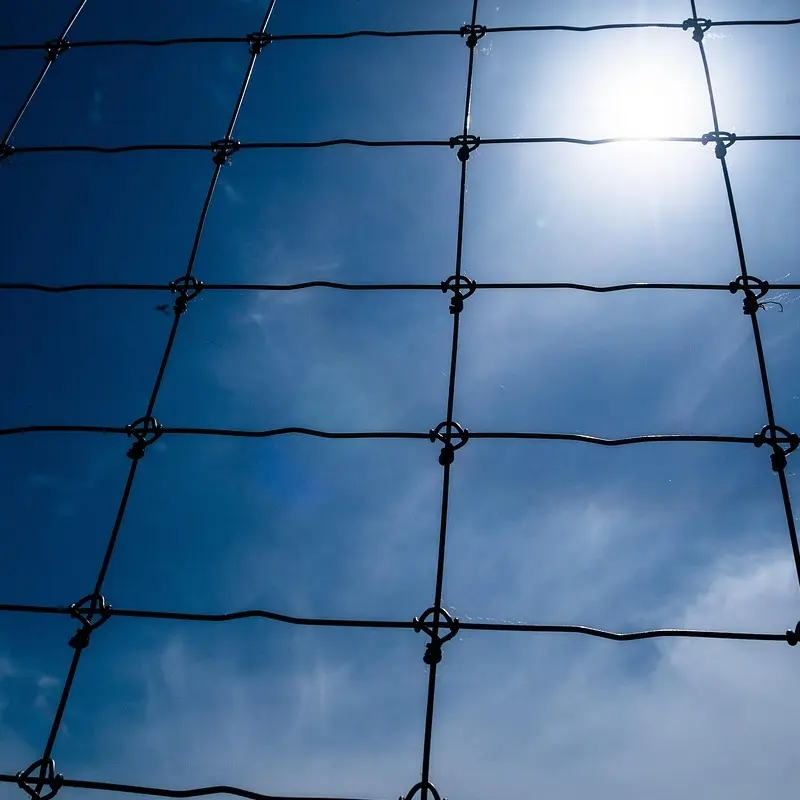
High Quality Hot Sell Fixed Knot Fence Cattle Wire Fence for farm