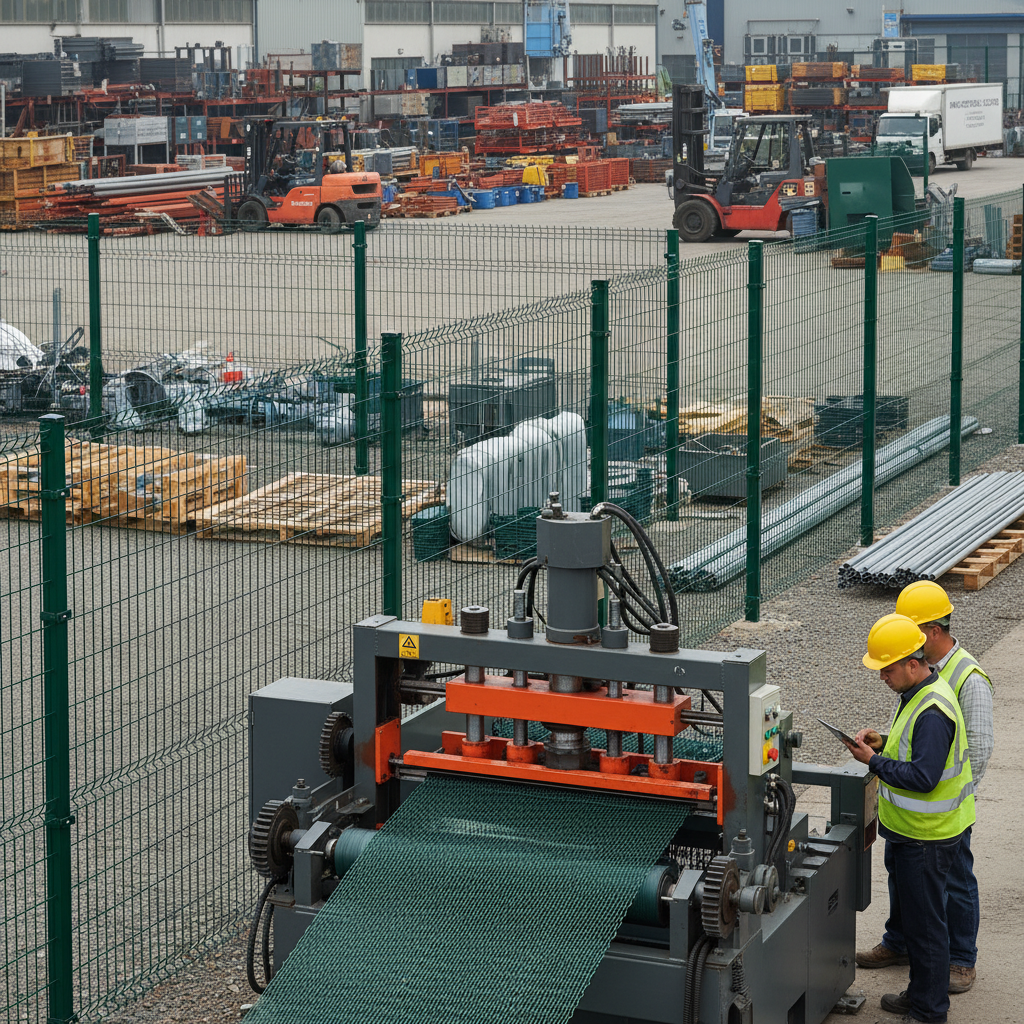
Securing a perimeter requires a strategic balance between visibility and impenetrable defense, a challenge that has led to the global adoption of high-strength wire solutions. Whether for industrial complexes or agricultural boundaries, the implementation of a robust steel mesh for fence applications provides a physical and psychological deterrent against unauthorized access.
In the modern security landscape, the demand for materials that can withstand extreme environmental stress while remaining cost-effective is higher than ever. From government agencies to private farms, the choice of fencing material directly impacts the long-term safety of assets and the operational efficiency of land management.
Understanding the nuances of different wire configurations, such as double twist designs and various coating options, allows facility managers to deploy a steel mesh for fence that is tailored to specific risk levels. By integrating high-quality galvanized or PVC-coated materials, organizations can ensure a durable barrier that resists corrosion and resists climbing.
The Fundamental Role of Steel Mesh for Fence in Security
The primary function of any steel mesh for fence system is to establish a clear, formidable boundary that prevents intruders from crossing into protected areas. By utilizing sharp barbs and high-tensile wire, these fences serve as a critical safety measure for high-security locations such as prisons, military bases, and government agencies, where the risk of unauthorized entry is a constant concern.
Beyond high-security zones, these systems are essential for animal husbandry and agricultural protection. The inherent firmness and durability of the wire ensure that livestock remain contained while keeping wild predators out, proving that the utility of steel mesh extends from national security to local farming sustainability.
Material Composition and Engineering Specifications
The efficacy of a security barrier depends heavily on its material makeup. High-quality options typically utilize plastic-coated iron wire, stainless steel wire, or electroplating wire to ensure the core structure remains rigid. With wire diameters ranging from 1.7mm to 2.8mm, the engineering focus is on creating a balance between flexibility for installation and strength to resist cutting or bending.
Precision in spacing is another critical factor. The distance between barbs, typically maintained between 7.5cm and 15cm, is designed to maximize the deterrent effect. Whether the arrangement is a single strand, multiple strands, or a three-strand configuration, the goal is to eliminate any gap large enough for a human or animal to navigate through without encounter.
Customization plays a pivotal role in meeting specific site requirements. By adjusting the barb length (usually 1.5cm to 3cm) and the gauge of the wire—ranging from BWG 11# to 20#—manufacturers can create a steel mesh for fence that meets the exact tension and security needs of the client.
Surface Treatment Technologies for Enhanced Longevity
Environmental exposure is the greatest enemy of steel infrastructure. To combat oxidation and rust, a steel mesh for fence must undergo rigorous surface treatment. Electro-galvanizing and hot-dip galvanizing are the industry standards, providing a zinc layer that acts as a sacrificial anode to protect the underlying iron.
For environments with high salinity or chemical exposure, PVC and PE coatings offer an additional layer of protection. The inner core, which can be black wire, electroplated, or hot-dip wire, is encased in a polymer shell. This not only prevents corrosion but also allows for aesthetic integration into the surrounding landscape while maintaining the structural integrity of the steel mesh for fence.
Innovation has recently introduced aluminum-coated treatments, often referred to as aluminized wire. Because aluminum naturally forms a protective oxide layer that does not rust, this coating significantly extends the service life of the fence, making it an ideal choice for coastal regions or humid climates where traditional galvanization might fail prematurely.
Performance Metrics of Different Fencing Configurations
Evaluating the performance of a security barrier requires looking at several metrics: anti-corrosion strength, climb resistance, and installation speed. A double twist barbed wire configuration, for instance, offers superior stability compared to single-strand options, as the intertwined wires distribute tension more evenly across the perimeter.
When selecting the right steel mesh for fence, the trade-off between gauge thickness and cost must be analyzed. While thicker gauges (like BWG 8#) offer maximum strength, thinner gauges are often sufficient for agricultural use, provided the surface treatment is adequate for the climate.
Security Performance Ratings by Mesh Type
Global Applications Across Diverse Industries
The versatility of steel mesh for fence ensures its application in virtually every sector. In military and government installations, it acts as a primary deterrent, often topped with concertina razor wire to create an impassable vertical barrier. These installations focus on maximum height and firmness to prevent any possibility of breach.
Conversely, in the agricultural sector, the focus shifts toward containment and protection. Paddock enclosures and cattle fences utilize these wire systems to manage livestock movements efficiently. In home protection, a more discreet but still effective version of the mesh is used to secure residential perimeters without compromising the property's aesthetic value.
Strategic Advantages of High-Quality Wire Barriers
One of the most significant advantages of investing in high-grade steel mesh for fence is the long-term reduction in maintenance costs. By selecting a hot-dip galvanized or aluminum-coated finish, the need for frequent replacements due to rust is virtually eliminated, providing a higher return on investment over the facility's lifecycle.
From a psychological perspective, the presence of a well-maintained, sharp-barbed fence serves as a powerful deterrent. It signals that the property is monitored and protected, which often prevents attempted intrusions before they even begin. This combination of physical strength and visual warning creates a comprehensive security layer.
Furthermore, the scalability of these systems allows them to be integrated with other security technologies. Many modern facilities combine steel mesh with motion sensors, CCTV cameras, and electronic alarms, transforming a passive physical barrier into an active, intelligent security system.
Comparative Analysis of Steel Mesh for Fence Variants
When selecting a specific variant of steel mesh for fence, users must consider the environment, the expected threat level, and the budget. For example, an electro-galvanized fence is cost-effective for short-term projects but may not survive a decade in a rainy climate, whereas PVC-coated options offer superior weather resistance.
The choice of wire gauge also impacts the fence's resilience. A 14# gauge wire provides a mid-range balance, while 10# gauge is reserved for high-impact zones. The barb distance also varies; closer spacing (7.5cm) is used for maximum security, while wider spacing (15cm) is common in rural grazing areas.
Ultimately, the decision should be based on a risk assessment of the area. By matching the surface treatment and wire gauge to the environmental stressors and security requirements, organizations can ensure a reliable barrier that protects both people and assets effectively.
Comparison of Steel Mesh for Fence Specifications and Performance
| Coating Type |
Corrosion Resistance |
Average Lifespan |
Primary Use Case |
| Electro-Galvanized |
Moderate |
3-5 Years |
Indoor/Dry areas |
| Hot-Dip Galvanized |
High |
10-20 Years |
Industrial Perimeters |
| PVC Coated |
Very High |
15-25 Years |
Coastal/Agricultural |
| Aluminized |
Extreme |
20+ Years |
High-Humidity Zones |
| Stainless Steel |
Supreme |
30+ Years |
Critical Infrastructure |
| Black Annealed |
Low |
1-3 Years |
Temporary Fencing |
FAQS
For coastal environments, PVC-coated or aluminum-coated options are highly recommended. PVC provides a thick polymer barrier that prevents saltwater from reaching the steel core, while aluminum-coated wire forms a natural oxide layer that is incredibly resistant to salt-spray corrosion, ensuring the fence does not rust prematurely.
Hot-dip galvanizing involves dipping the wire into molten zinc, creating a thicker, more durable layer that offers superior long-term protection. Electro-galvanizing uses an electrical current to apply a thinner zinc layer, which results in a smoother finish and lower cost but significantly less corrosion resistance over time.
Yes, most professional manufacturers offer ODM services. Barb distances typically range from 7.5cm to 15cm, and barb lengths can be adjusted between 1.5cm and 3cm. This allows the fence to be tailored to the specific size of animals being contained or the level of human deterrent required.
Yes, double twist configurations are generally stronger and more stable. The twisting process creates a structural bond between the wires that prevents the fence from sagging as easily and makes it more difficult for intruders to cut or pull apart compared to a simple single-strand layout.
Common gauges range from BWG 11# to 20#. For high-security applications, thicker wires (lower gauge numbers like 11# or 12#) are preferred for their tensile strength. For lighter agricultural or temporary use, thinner wires (like 16# or 18#) are often sufficient and more cost-effective.
To prevent digging, it is recommended to bury the bottom strand of the steel mesh 15-30cm into the ground or attach the mesh to a concrete footer. Combining the fence with a gravel base can also deter animals from attempting to tunnel under the barrier.
Conclusion
Selecting the right steel mesh for fence is a critical decision that balances security, durability, and cost. By carefully considering the material gauge, the specific arrangement of barbs, and the appropriate surface treatment—whether it be hot-dip galvanizing or advanced PVC coating—owners can create a perimeter that is both impenetrable and long-lasting. The integration of these physical barriers with strategic planning ensures that assets are protected against both human intrusion and animal encroachment.
As material science evolves, we can expect even more resilient coatings and stronger alloys to redefine the standards of perimeter security. For those looking to upgrade their current defenses or start a new installation, prioritizing quality materials over short-term savings will inevitably lead to lower maintenance costs and enhanced safety. To explore our full range of professional security solutions, visit our website: www.fencingwiremesh.com.