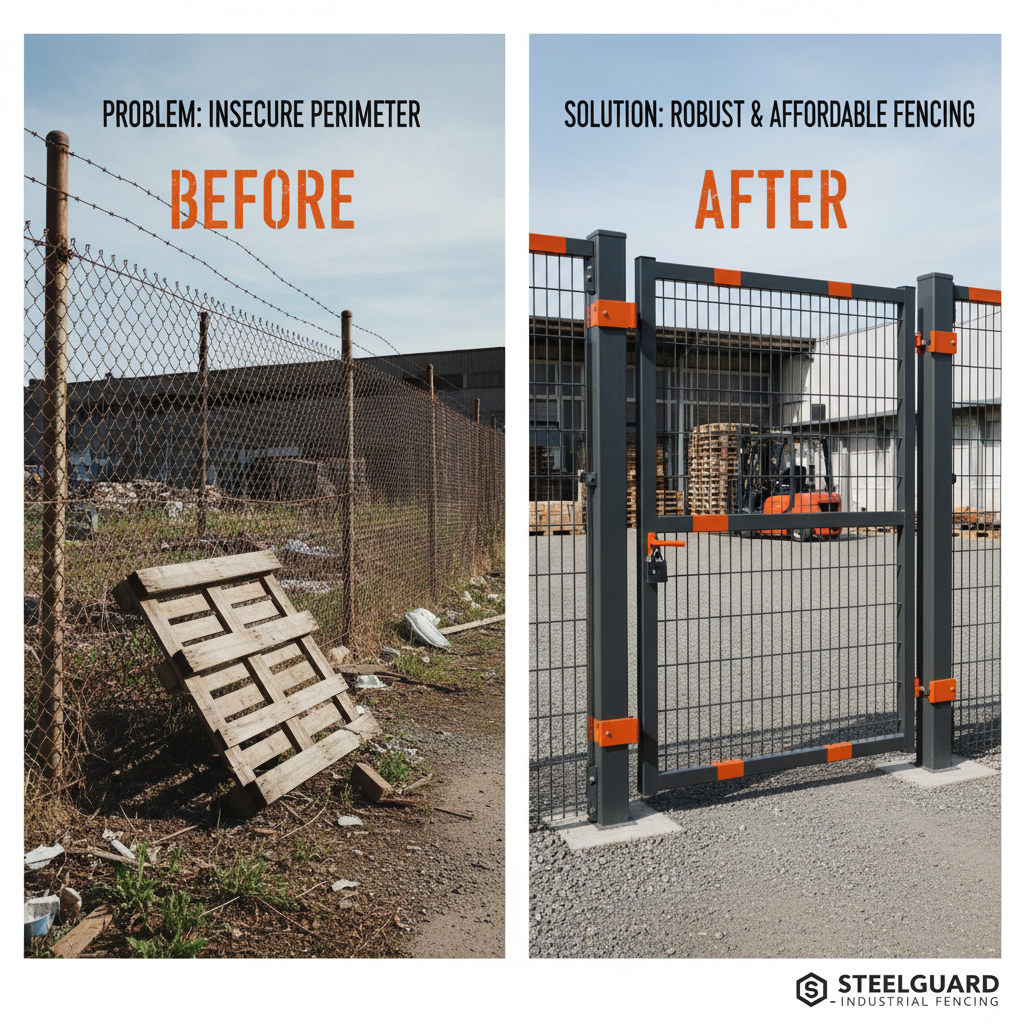


Selecting the right perimeter barrier requires a balance between aesthetic integration and rigorous security standards. When searching for black chain link fence suppliers, procurement officers often prioritize the longevity of the PVC coating and the gauge of the underlying steel to ensure the structure withstands environmental stress while remaining discreet. This guide explores the technical nuances of black vinyl-coated systems and high-security alternatives.
In industrial and corporate environments, the demand for "invisible" yet robust security has led to the widespread adoption of black-coated metal mesh. Unlike traditional galvanized steel, these systems offer a lower visual profile, blending into landscapes while providing critical deterrence. However, the quality of the powder coating and the welding precision vary significantly between manufacturers, affecting both the anti-corrosion properties and the overall climb-resistance of the installation.
Readers will gain an understanding of how to differentiate between standard chain link and high-security 358 mesh, the critical specifications to verify during supplier auditing, and the operational trade-offs between different coating methods. By focusing on material certifications and fabrication precision, project managers can avoid common procurement pitfalls and ensure a long-term return on investment for their security infrastructure.
Procurement Logic for Black Vinyl Coated Fencing
The procurement of professional-grade black fencing is not merely about purchasing a product, but about securing a perimeter solution. Most commercial buyers focus on the "black" aspect for aesthetic reasons, but the engineering value lies in the bonding between the metal substrate and the polymer layer. A high-quality system utilizes a hot-dipped galvanized core before the PVC or powder coating is applied. This dual-layer protection ensures that if the outer black layer is scratched or punctured, the underlying zinc layer prevents rapid oxidation and structural failure. For those engaging with black chain link fence suppliers, it is essential to verify whether the coating is dip-coated or powder-coated, as this affects the thickness and uniformity of the finish across the wire intersections. In high-traffic industrial zones, the ability of the fence to resist shearing and climbing becomes the primary KPI, shifting the focus from simple chain link to welded security mesh architectures.
Evaluating High-Security Perimeter Solutions
When moving beyond basic boundary marking to active security, the technical specifications of the mesh become the deciding factor. The following analysis breaks down the core dimensions and material considerations required for corporate and government-grade installations.
Coating Technology and Durability
The effectiveness of a black finish depends on the application method. PVC powder coating creates a durable, weather-resistant film that prevents corrosion and rust. For high-security installations, such as the 358 anti-climb guardrail, the coating must be uniform even on the welded joints to prevent "point corrosion," which can compromise the fence's structural integrity over time.
| Coating Type | Corrosion Resistance | Visual Integration | Primary Use Case |
|---|---|---|---|
| Standard PVC Dip | Medium | High | Residential/Commercial |
| Powder Coated | High | Very High | Industrial/Security |
| Hot-Dipped Galv. | Very High | Low (Silver) | Heavy Industrial |
| Galv + PVC Coated | Excellent | High | Prisons/Airports |
| Electrostatic Spray | Medium | High | Interior Partitions |
| Polymer Hybrid | High | Medium | Coastal Environments |
Mesh Density and Security Levels
Security is inversely proportional to the aperture size. While standard chain link is common, high-security variants like the 358 mesh use a dense grid (e.g., 12.7x76.2mm) that prevents fingers or tools from gaining a foothold. This "anti-climb" and "anti-cut" characteristic makes it the preferred choice for military and airport perimeters where traditional fences are insufficient.
Material Grade Comparison
The use of Q195 or higher-grade steel determines the tensile strength of the barrier. A wire diameter ranging from 3.0mm to 6.0mm allows for different levels of rigidity. Heavier gauges are essential for prisons and light rail corridors to prevent forced entry via cutting tools, ensuring the perimeter remains an effective deterrent.
Environmental Adaptability
Environmental factors such as humidity and salt spray dictate the required surface treatment. In coastal regions, the combination of hot-dipped galvanization and a UV-stabilized black powder coating is non-negotiable to prevent the polymer from cracking or the steel from pitting under saline conditions.
Installation Flexibility
Modern security fences utilize modular connection systems. Using square columns (e.g., 60x60mm) and flat iron connectors with screws allows the mesh to be installed on uneven terrain. This flexibility is critical for large-scale engineering projects where pre-embedding pillars in cement may not be feasible for every meter of the boundary.
Customization Capabilities
B2B procurement often requires bespoke dimensions. Professional factories with dedicated design teams can adjust mesh apertures and height (from 1.8m up to 5.2m) to meet specific security protocols. The addition of Y-shaped columns for razor wire or barbed wire further enhances the top-edge security of the system.
Lifecycle Cost Analysis
While high-density welded mesh has a higher initial cost than standard link fencing, the lifecycle value is superior due to reduced maintenance and longer service life. The PVC powder coating effectively extends the replacement cycle by preventing rust, significantly lowering the total cost of ownership for municipal and corporate entities.
FAQ
What is the main difference between standard black chain link and 358 security mesh?
Standard black chain link is woven and primarily used for boundary definition and basic deterrence. 358 security mesh is a welded high-density grid designed specifically to be anti-climb and anti-cut; its apertures are too small for fingers or pliers to penetrate, making it suitable for high-risk sites like prisons or airports.
How does the PVC powder coating improve the fence's lifespan?
The PVC powder coating acts as a physical barrier against oxygen and moisture. When applied over a galvanized core, it creates a dual-protection system that prevents corrosion. This is particularly vital for black finishes, as it prevents the paint from peeling and keeps the steel structure intact in harsh weather.
Can these fences be installed on sloping or uneven ground?
Yes. By using square columns and flat iron connectors secured with screws, the mesh panels can be adjusted to the terrain. The supports can be either pre-embedded in concrete or fixed to an existing cement floor using flanges, providing high adaptability for various landscapes.
What are the typical lead times for bulk international orders?
Generally, sample orders are processed within approximately 7 days. For mass production of industrial fencing, the lead time is typically 20-30 days following the receipt of the deposit and final approval of technical specifications.
What documentation should I request from a fencing supplier?
Professional suppliers should provide Certificates of Analysis or Conformance, Insurance documents, and Certificates of Origin. These documents verify the material grade (e.g., Q195 steel) and the quality of the galvanization and coating processes.
Is it possible to customize the color beyond black?
Yes, while black is the most popular for discreet security, the PVC powder coating process allows for a wide range of customized colors to meet specific architectural requirements or corporate branding guidelines.
References and further reading
- ASTM International - Standards for Chain-Link Fencing and Coating.
- International Organization for Standardization (ISO) - Corrosion protection of steel.
- World Security Perimeter Guidelines for Airport Infrastructure.
Related Articles