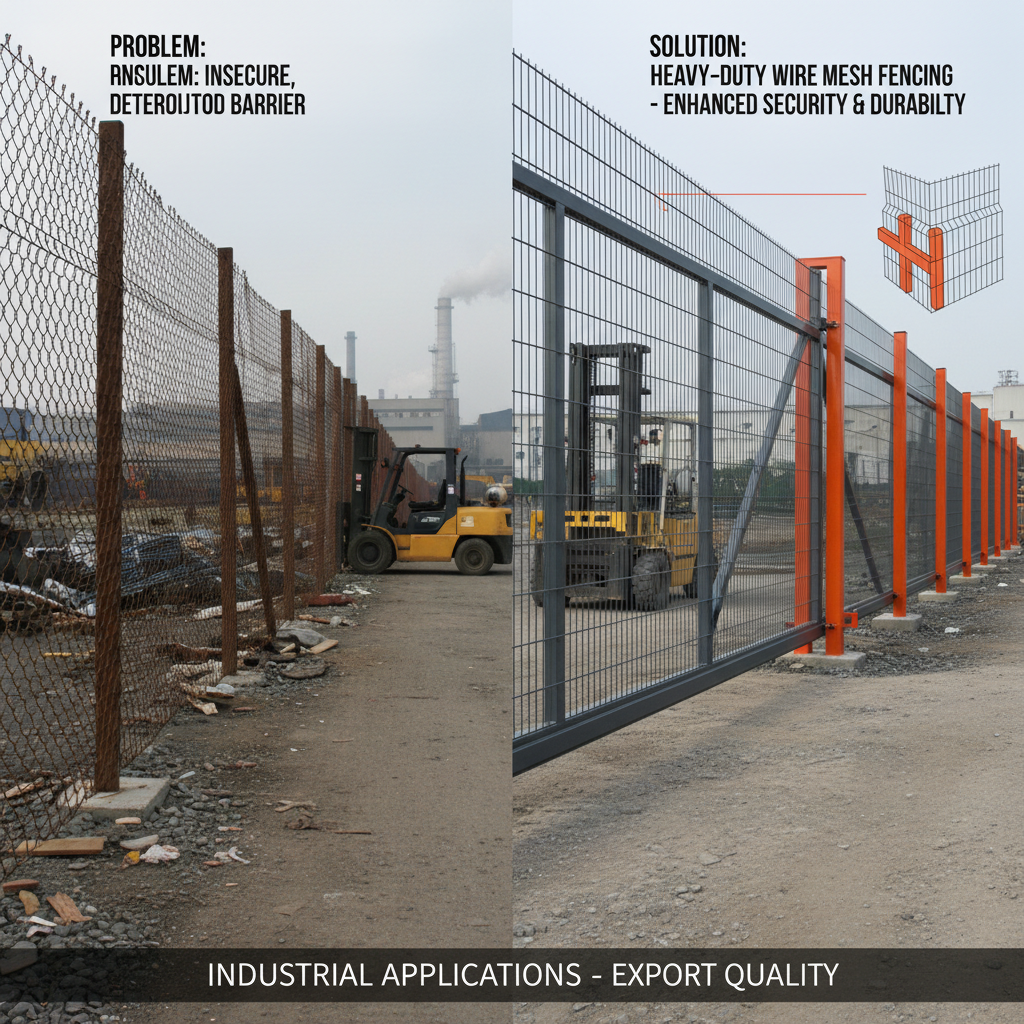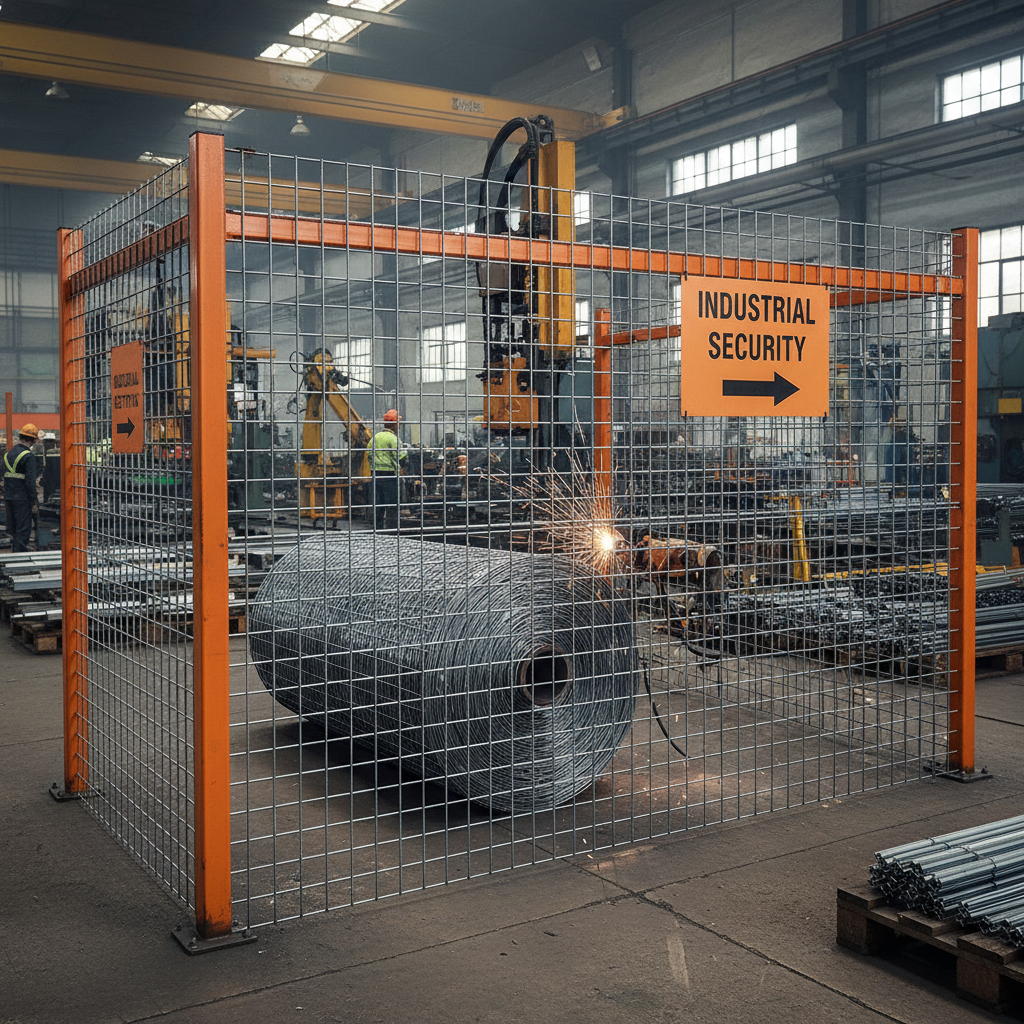

Selecting the right boundary system often requires a balance between permeability, security strength, and environmental resilience. Whether for industrial perimeter protection or sports facility containment, wire mesh metal fencing serves as a critical infrastructure component that defines the safety and accessibility of a site.
Modern engineering has evolved these systems from simple wire barriers into sophisticated security solutions. From high-tensile welded mesh designed to thwart intruders to flexible chain link structures for athletic courts, the material science behind galvanized steel and specialized coatings determines the long-term viability of the installation.
Understanding the technical trade-offs between different mesh apertures and wire gauges is essential for procurement officers and project managers. This guide examines the operational logic of metal fencing systems to ensure a data-driven selection process for diverse industrial and commercial environments.

Structural Logic and Material Composition of Metal Mesh

At its core, the effectiveness of a wire mesh system depends on the intersection of wire gauge and mesh aperture. For instance, chain link fences are woven from steel or iron wire, creating a diamond-shaped void that provides a balance of visibility and structural integrity. These are often utilized in environments where high-impact resistance is less critical than general boundary demarcation.
In contrast, welded wire mesh utilizes thermal fusion at every intersection, creating a rigid grid that resists deformation under pressure. This structural rigidity makes it a preferred choice for reinforcing mesh in construction or high-security 3D fencing. The choice of material—typically low-carbon steel or stainless steel—directly impacts the system's tensile strength and its ability to withstand external shearing forces.
Anti-corrosion treatments are the final layer of structural logic. Galvanization, whether hot-dipped or electro-plated, creates a sacrificial zinc layer that prevents oxidation. For extreme environments, PVC coatings provide an additional chemical barrier, extending the service life of the fence in coastal or high-humidity industrial zones.
Key Performance Indicators for Security Mesh Evaluation
Evaluating a security fence requires moving beyond aesthetic appeal to quantitative metrics. A primary KPI is the "anti-climb" capability, often seen in 358 mesh systems. By reducing the aperture size, the system eliminates foot-holds and finger-holds, significantly increasing the time required for an unauthorized entry.
Another critical metric is the compressive and tensile strength of the wire. High-strength steel wire ensures that the fence can withstand bending forces without permanent deformation. In sports venues, for example, a 4-foot galvanized black chain link fence must withstand repeated impacts from balls and athletes while maintaining its tension.
Finally, the "barrier efficiency" refers to the ratio of visibility to protection. While a solid wall provides maximum privacy, wire mesh allows for surveillance visibility (CCTV integration), which is a strategic requirement for most modern security protocols.
Diversified Application Scenarios for Industrial Fencing
Industrial applications vary wildly, necessitating a modular approach to fencing. In agricultural sectors, cattle fences and hexagonal wire mesh are prioritized for their flexibility and ability to contain livestock without causing injury, often utilizing softer wire gauges and larger apertures.
Civil engineering projects often employ gabion wire mesh—box-shaped containers filled with rock. These are indispensable for flood control, seawall protection, and hillside stabilization. The heavy-duty nature of the mesh allows it to contain massive weights while remaining permeable to water, preventing the buildup of hydrostatic pressure.
For specialized safety needs, such as highway infrastructure, anti-glare fences and barrier bridge guardrails are deployed. These systems are designed to reduce driver fatigue by blocking opposing headlights and provide structural containment to prevent vehicles from exiting the roadway in the event of a collision.
Comparative Analysis of Mesh Strength and Durability
When comparing standard boundaries to high-security wire mesh metal fencing, the difference in performance is most evident in shear resistance and corrosion longevity. Standard fences may fail under focused mechanical stress, whereas specialized security mesh distributes the load across multiple welded nodes.
The following data represents relative performance benchmarks comparing generic boundary fencing against high-specification security mesh across five critical industrial dimensions.
wire mesh metal fencing Performance Metrics
As indicated, the integration of specialized welding and galvanization significantly elevates the "Anti-Climb" and "Corrosion Resistance" scores. This performance gap justifies the higher initial investment for critical infrastructure where the cost of a security breach far outweighs the procurement cost of the fence.
Deployment Best Practices for Perimeter Security Systems
Installation is where the theoretical strength of a fence meets reality. A common failure point is the connection method; while tying wire is sufficient for cattle fences, welding or heavy-duty bolting is required for security fencing to prevent the mesh from being peeled away from the posts.
For basketball courts or sports venues, tensioning is key. A sagging chain link fence not only looks unprofessional but loses its ability to deflect high-velocity impacts. Using professional tension bars and bands ensures that the 4000mm x 4000mm panels remain taut over years of use.
Furthermore, the anti-corrosion treatment must be maintained. Any scratches in the powder coating or galvanized layer during installation should be treated with a cold-galvanizing spray to prevent localized oxidation, which can lead to systemic structural failure over time.
Future Directions in Sustainable Coating Technologies
The industry is likely to shift toward more environmentally friendly anti-corrosion methods. While hot-dip galvanizing is the current standard, there is an increasing interest in zinc-aluminum-magnesium (ZAM) coatings, which offer superior edge protection and higher corrosion resistance in saline environments.
Smart fencing is another emerging trend. We may see the integration of fiber-optic sensors directly into the wire mesh, allowing the fence to act as a giant sensor that detects vibrations or cutting attempts in real-time, triggering an immediate alert to security hubs.
Sustainability in production is also becoming a procurement requirement. The move toward recycled steel for non-security applications and low-VOC powder coatings reflects a broader industry alignment with global ESG (Environmental, Social, and Governance) standards.
Selection Matrix for Commercial Fencing Procurement
Choosing the correct system depends on a trade-off between cost, security level, and environmental exposure. A high-security site cannot rely on simple chain link, nor does a residential garden require 358 anti-climb mesh.
The following matrix provides a decision-support framework for selecting the most appropriate wire mesh metal fencing based on the primary project goal.
| Fencing Type | Primary Strength | Ideal Use Case | Maintenance Level |
|---|---|---|---|
| 358 Anti-Climb | High Security | Prisons, Data Centers | Low |
| Chain Link | Cost-Effective | Sports Courts, Parks | Medium |
| Welded Wire | Rigidity | Industrial Warehouses | Low |
| Gabion Mesh | Mass Stability | Erosion Control | Very Low |
| Razor Wire | Deterrence | Military Perimeters | Medium |
| 3D Mesh | Aesthetics/Safety | Commercial Parks | Low |
Project managers should prioritize the "Primary Strength" column to align with their risk assessment. For those evaluating specific technical parameters or custom dimensions, the professional design teams at www.fencingwiremesh.com can provide tailored engineering solutions to match site-specific requirements.
Frequently Asked Questions
Conclusion
The selection of wire mesh metal fencing is a strategic decision that impacts long-term site security and operational costs. By matching the structural logic—such as aperture size and coating type—to the specific environmental demands, organizations can ensure a boundary that is both resilient and cost-effective.
From the high-security demands of 358 mesh to the versatility of chain link and the stability of gabions, the right choice depends on a rigorous analysis of KPIs. For those seeking certified materials and professional design support for their engineering projects, the comprehensive product range available at www.fencingwiremesh.com provides a reliable baseline for procurement.