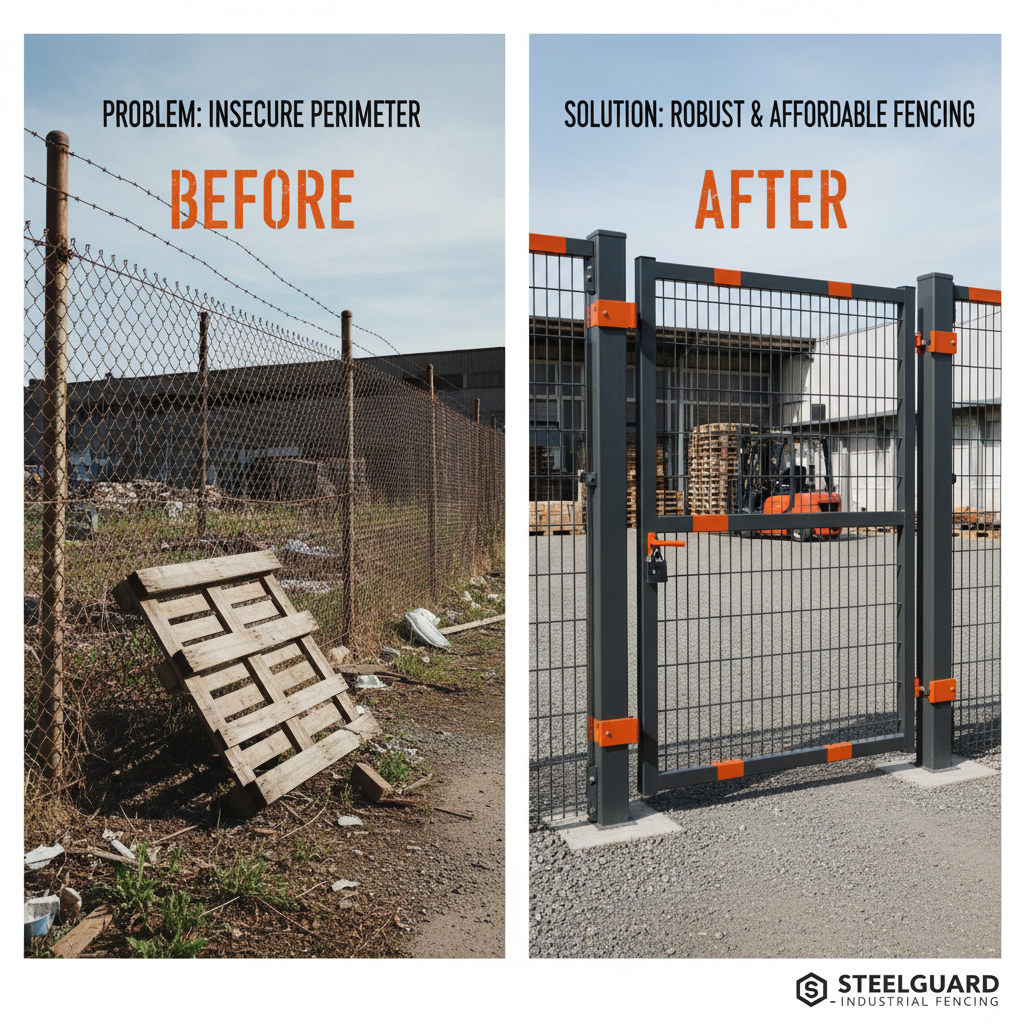

The global procurement landscape for security infrastructure is currently shifting toward a more rigorous evaluation of material durability and supply chain transparency. For contractors and municipal planners, identifying reliable chain link fencing wholesale suppliers is no longer just about price-per-foot, but about the engineering integrity of the galvanization and the consistency of the wire gauge.
This transition is driven by an increasing demand for high-performance boundaries in industrial zones and transportation hubs, where environmental corrosion and physical stress are constant variables. When the structural failure of a perimeter occurs, the cost of replacement far outweighs the initial savings of low-grade materials, making technical specification auditing a critical step in the procurement process.
This article analyzes the technical benchmarks required when auditing wholesale suppliers, the relationship between material coatings and lifespan, and how to integrate secondary safety components like anti-skid plating to create a comprehensive industrial security environment.


The production of industrial fencing involves a complex sequence of wire drawing, weaving, and coating. Wholesale suppliers typically manage multiple workshops, including stamping, welding, and powder coating, to ensure that the final product meets specific architectural loads.
Consistency in the weave pattern of a chain link fence directly impacts its structural stability under lateral pressure. Professional manufacturing facilities utilize advanced machinery to maintain precise tension, which prevents sagging over long spans—a common failure point in low-cost wholesale batches.
When auditing chain link fencing wholesale suppliers, the most critical metric is the wire gauge and the zinc coating weight. A variance of even 0.1mm in wire thickness can significantly alter the fence's resistance to cutting and impact, potentially compromising the security of the entire facility.
Beyond the wire itself, the mesh aperture size must be matched to the intended security level. While larger apertures offer better visibility and lower wind resistance, smaller apertures are necessary for keeping out smaller intruders or containing specific materials. Procurement managers must verify that the supplied mesh conforms exactly to the theoretical weight tables provided in the technical documentation.
The stability of the fence is also dependent on the quality of the posts and rails. The transition from a welded wire mesh to a flexible chain link requires different anchoring systems. Ensuring that the supplier provides compatible hardware—such as tension bars and ties—is essential to avoid on-site installation delays and structural weaknesses.
The lifespan of a metal fence is primarily determined by its interaction with the atmosphere. Hot-dip galvanization remains the industry standard for high-corrosion environments, providing a sacrificial zinc layer that protects the underlying steel from oxidation.
In coastal or heavy-industrial regions, standard galvanization may be insufficient. Engineering teams often specify higher zinc weights or hybrid coatings. When sourcing from wholesale suppliers, it is imperative to request certification of the coating thickness to ensure the product can withstand the specific salinity or acidity of the deployment site.
Different fencing configurations serve distinct security purposes. A 358 anti-climb mesh offers significantly higher security than standard chain link but at a higher material cost and weight. This necessitates a calculated decision based on the risk profile of the area being secured.
The following assessment evaluates various fencing types based on a normalized engineering score, considering factors such as penetration resistance, installation speed, and long-term maintenance requirements.
A comprehensive industrial security strategy extends beyond the perimeter fence to the internal pathways and access points. In environments where heavy fencing is deployed, such as power plants or chemical refineries, the transition points—stairs and walkways—often become safety hazards, especially in inclement weather.
To mitigate this, engineering teams integrate anti-skid diamond steel plates on stair treads and ramps. These checkered plates, typically ranging from 2.0mm to 8.0mm in thickness, provide the necessary friction to prevent slips in oily or wet conditions, mirroring the same commitment to safety and durability found in high-grade security fencing.
The industry is moving toward "intelligent perimeters," where physical barriers from chain link fencing wholesale suppliers are integrated with fiber-optic vibration sensors and AI-driven camera systems. This hybrid approach allows for real-time breach detection without sacrificing the cost-effectiveness of traditional metal mesh.
Another significant trend is the adoption of sustainable coatings. There is increasing research into zinc-aluminum-magnesium (ZAM) coatings, which offer superior corrosion resistance compared to traditional galvanization, potentially extending the lifecycle of industrial fences in extreme environments by several decades.
Modularization is also redefining installation. Pre-fabricated fence panels with integrated mounting systems are reducing on-site labor costs and ensuring that the technical specifications are maintained across the entire installation, reducing the risk of human error during the tensioning process.
Selecting the right configuration requires a balanced analysis of security requirements, environmental constraints, and budget. A "one size fits all" approach often leads to over-specification in low-risk areas or critical vulnerabilities in high-risk zones.
Buyer decision frameworks should prioritize the material's theoretical weight and coating thickness over nominal descriptions. By using a standardized selection matrix, procurement officers can ensure that the products provided by wholesale suppliers meet the specific load-bearing and anti-corrosion needs of the project.
The following table provides an evaluation framework for different industrial fencing configurations based on typical deployment scenarios.
| Configuration Type | Primary Specification | Operating Factor | Recommended Use Case |
|---|---|---|---|
| Standard Chain Link | Galvanized Steel | Medium Durability | General Perimeter |
| High-Security 358 | Anti-Climb Mesh | High Penetration Resistance | Critical Infrastructure |
| PVC Coated Mesh | Polymer Over-layer | Corrosion Barrier | Coastal/Urban Areas |
| Welded Razor Mesh | Integrated Razor Wire | Maximum Deterrence | High-Risk Boundaries |
| Expanded Metal | Diamond Pattern | High Rigidity | Industrial Machinery Enclosures |
| Heavy Duty 3D Fence | Reinforced Bends | High Lateral Stability | Commercial Parking / Logistics |
Verification should be conducted using a magnetic thickness gauge or by requesting an independent laboratory report. In a professional procurement process, samples should be tested for coating mass per unit area (g/m²) to ensure compliance with international standards such as ASTM or ISO. Relying on "galvanized" labels without specific weight data often leads to premature rust in industrial environments.
Standard chain link is woven, allowing for more flexibility and easier cutting with basic tools. In contrast, 358 mesh is a high-density welded wire mesh with very small apertures that prevent finger or tool insertion and eliminate footholds for climbing. This makes 358 mesh significantly more resistant to forced entry, although it requires more rigid post installation due to its lack of flexibility.
PVC coating is generally suitable for most ambient temperatures, but extreme heat or direct exposure to certain industrial chemicals can cause the polymer to degrade or peel. In such cases, high-temperature powder coatings or specialized stainless steel alloys are recommended. Always verify the thermal stability of the coating material with the supplier's technical data sheet before deploying in heat-intensive environments.
While the wire gauge itself has a minimal effect on wind resistance, the mesh density (aperture size) is the primary factor. However, a thicker gauge provides the structural rigidity needed to prevent the fence from bowing or collapsing under high wind pressure. Engineering calculations must balance the "open area" percentage of the mesh with the gauge strength to ensure the posts can withstand the calculated wind load for the region.
Preventing sagging requires a combination of high-quality tension bars, sturdy tension bands, and a properly calibrated tensioning tool. The fence must be stretched to a specific tension—too loose results in sagging, while too tight can stress the posts and lead to structural failure. Regular inspections of the tension ties are necessary, especially in areas with high temperature fluctuations that cause metal expansion and contraction.
For standard coastal environments, hot-dip galvanized steel with a high zinc weight is often sufficient and more cost-effective. However, in extreme high-salinity or chemical-heavy environments where the sacrificial zinc layer would be consumed too rapidly, Grade 316 stainless steel is the preferred choice due to its inherent chromium-oxide protective layer. The decision should be based on a lifecycle cost analysis comparing initial investment vs. replacement frequency.
The efficiency of an industrial perimeter is determined by the synergy between material specification, coating integrity, and complementary safety installations. By shifting the focus from simple cost-per-unit to a lifecycle performance model, procurement managers can significantly reduce long-term maintenance overhead while enhancing site security.
Ultimately, the integration of high-performance boundaries from chain link fencing wholesale suppliers alongside critical safety components like anti-skid diamond plates ensures a professional engineering standard that protects both the facility assets and the personnel operating within them.