
Selecting the right perimeter security requires a balance between visibility, structural integrity, and deterrent capability. For many industrial and commercial projects, the decision often comes down to the specific capabilities of various chain link fence manufacturers and the material science behind their mesh designs.
Modern security requirements have shifted from simple boundary markers to integrated defense systems. This evolution is driven by the need for high-durability materials that can withstand extreme weather while remaining difficult to breach, leading to a surge in demand for advanced coatings and reinforced wire gauges.
Whether managing a government facility or a residential paddock, understanding the technical nuances of wire mesh fabrication is essential for long-term asset protection. This article analyzes the current landscape of security fencing, focusing on selection criteria and the technical benchmarks of professional production.


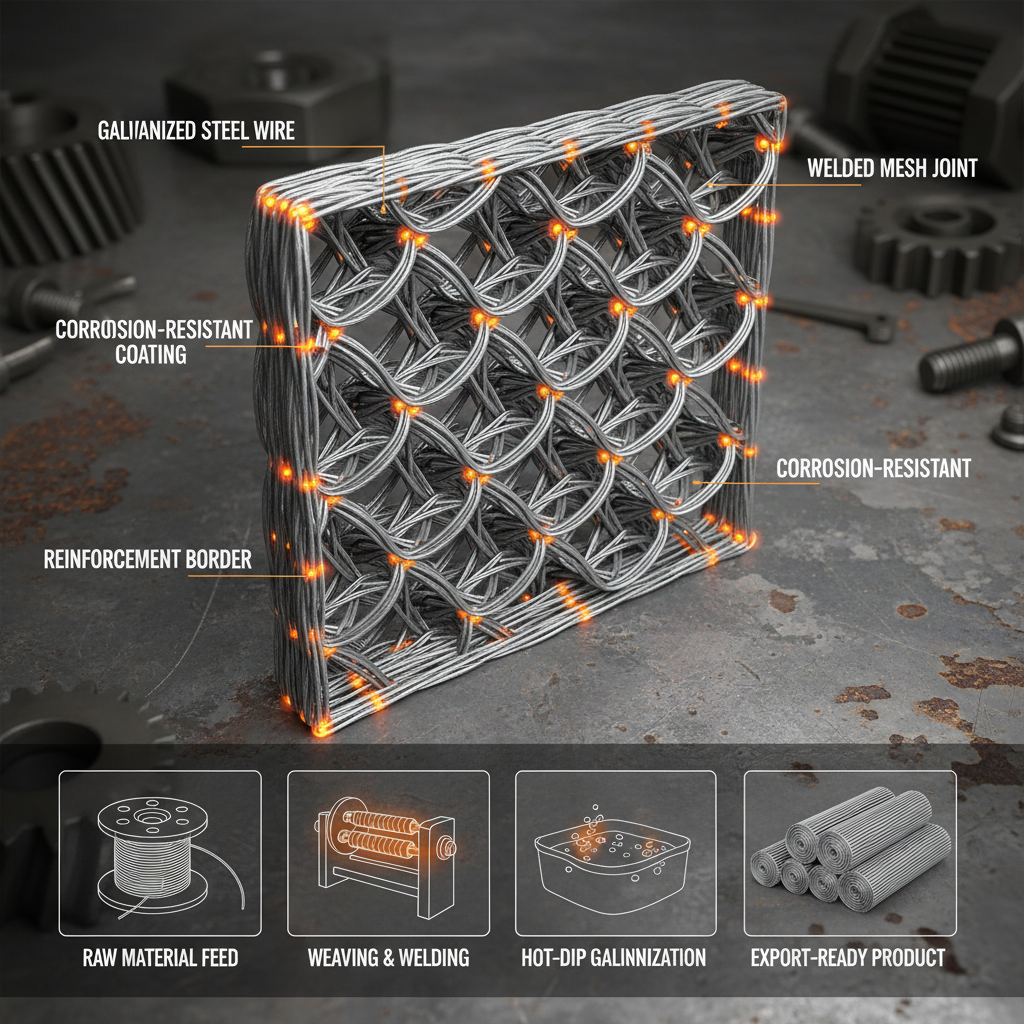
The efficacy of a security fence is rooted in its geometry and tensile strength. Chain link structures rely on the interlocking of galvanized or coated wires, where the mesh size and wire gauge determine the fence's resistance to cutting and climbing. Professional fabrication involves precise tensioning to ensure the mesh does not sag over time, maintaining its structural integrity across long spans.
Beyond simple chain link, high-security options like the 358 Anti Climb Mesh utilize smaller apertures that prevent the insertion of fingers or tools, significantly increasing the time required for an intruder to breach the perimeter. This technical shift reflects a move toward "delay-based" security, where the fence acts as a critical time-buffer for response teams.
The longevity of any metal fence is primarily determined by its surface treatment. In environments prone to high humidity or salinity, standard steel quickly degrades. To combat this, industry standards utilize several layers of protection, starting from electro-galvanizing for mild environments to hot-dip galvanizing for severe industrial conditions. The process of dipping steel into molten zinc creates a metallurgical bond that protects the underlying metal from oxidation.
For enhanced durability, PVC and PE coatings are applied over galvanized cores. This dual-layer approach provides a chemical barrier that resists UV radiation and atmospheric pollutants. More recently, aluminum-coated wire has emerged as a specialized solution; since aluminum does not rust, it offers superior corrosion resistance in coastal regions, extending the service life of the installation without requiring frequent maintenance.
Material selection also extends to the core wire. Depending on the security level, manufacturers use stainless steel for maximum strength and corrosion resistance, or high-carbon steel for applications where physical impact resistance is the priority. The choice between these materials directly impacts the fence's weight, cost, and operational lifespan.
Security is not just about physical barriers but about psychological deterrence. The integration of topping elements, such as Concertina Razor Wire or Barbed Wire, transforms a standard fence into a high-security perimeter. These additions create a physical risk for intruders, making the cost of entry—both in terms of effort and potential injury—too high to justify.
Effective security fencing is measured by the "Delay Factor"—the specific amount of time it takes for an unauthorized entity to penetrate the barrier using standard tools. Increasing the delay factor allows surveillance systems more time to trigger alerts and security personnel more time to intervene.
To optimize this, specialized designs such as Welded Razor Mesh combine the structural stability of welded wire with the sharp edges of razor blade wire. This prevents the fence from being climbed and makes it nearly impossible to cut through without heavy-duty industrial equipment, providing a comprehensive solution for prisons, military bases, and government agencies.
When evaluating different fencing systems, stakeholders often use a relative performance index to balance cost against security. For instance, while a standard chain link fence offers excellent visibility and moderate cost, it provides lower resistance to cutting compared to expanded metal or welded mesh systems.
The following assessment focuses on the relative effectiveness of various products in three key areas: climb resistance, cut resistance, and corrosion durability. These values represent a qualitative analysis of typical industrial specifications.
The deployment of security fencing is never a "one size fits all" process. In a typical industrial setting, such as a warehouse or factory, a combination of chain link fences for general boundaries and 3D fences for internal zoning is often used. These provide a clear demarcation of space without completely obstructing the view, which is critical for internal security monitoring.
Conversely, for high-risk areas like electrical substations or military depots, the requirements shift toward extreme anti-climb and anti-cut specifications. In these cases, the use of double-wire mesh or reinforced security fencing wire is mandatory. The installation often includes multiple strands of barbed wire or razor wire, which are carefully arranged (single or triple strand) to eliminate any possible hand-hold or foot-hold for climbers.
The industry is currently witnessing a move toward hybrid security systems. Physical barriers are no longer viewed as standalone solutions but as the first layer of a multi-tiered defense. This has led to the integration of vibration sensors and fiber-optic detection cables directly into the mesh of the fence, allowing operators to pinpoint the exact location of a breach attempt in real-time.
Another significant trend is the demand for customized, aesthetic security. Industrial sites located near urban centers are increasingly opting for powder-coated 3D fences or noise barriers that provide security without appearing overly aggressive. This balances the need for safety with municipal zoning laws and community aesthetics, proving that security can be both effective and visually integrated.
Sustainability is also becoming a factor. The adoption of aluminum-coated wires and high-grade PVC coatings is driven by the desire to reduce the total cost of ownership. By extending the replacement cycle from 10 years to 20+ years through superior corrosion resistance, companies can significantly lower their long-term maintenance budgets.
Procuring from professional chain link fence manufacturers requires a rigorous evaluation of technical specifications. Buyers must look beyond the price per linear meter and consider the wire gauge, the quality of the galvanization (e.g., hot-dip vs. electro-galvanized), and the precision of the weld points in welded mesh products.
A common mistake in procurement is over-specifying for low-risk areas or under-specifying for high-risk zones. For instance, using expensive stainless steel in a dry, inland paddock is an inefficient use of capital, whereas using standard galvanized wire in a coastal chemical plant will lead to premature failure and increased risk.
The following framework provides a guide for matching the fencing type to the specific risk level and environmental condition of the project site.
| Risk Level | Primary Environment | Recommended System | Key Specification |
|---|---|---|---|
| Low | Agricultural/Rural | Cattle/Chain Link | Galvanized Low-Carbon Steel |
| Moderate | Commercial/Urban | 3D Mesh / PVC Coated | Powder Coated / PE Finish |
| High | Industrial/Critical | 358 Anti-Climb | High-Tensile Welded Wire |
| Extreme | Military/Prisons | Welded Razor Mesh | Double-Strand Razor Topping |
| Corrosive | Coastal/Marine | Aluminum Coated | Aluminized Zinc Coating |
| Custom | Specialized Engineering | Custom Weld Mesh | Tailored Gauge & Aperture |
Hot-dip galvanizing involves immersing the steel in molten zinc, creating a thick, durable layer that provides superior corrosion protection, ideal for outdoor and harsh environments. Electro-galvanizing uses an electric current to apply a thinner zinc layer, resulting in a smoother finish and lower cost, but it is significantly less resistant to rust and is best suited for indoor or low-moisture applications.
Wire gauge selection depends on the intended deterrent level. For basic boundaries, BWG 11#-20# is common. For high-security barriers, a thicker gauge (lower BWG number) is required to prevent cutting. You should evaluate the tools a potential intruder might use; for example, high-security sites require gauges that cannot be penetrated by standard handheld bolt cutters, typically requiring specialized high-tensile steel.
The 358 Anti Climb Mesh is widely considered the most effective. Its design features very small apertures (typically 76.2mm x 12.7mm) that are too small for fingers or toes to gain a grip. When combined with a vertical orientation and razor wire toppings, it creates a nearly impassable vertical barrier compared to standard chain link or larger welded mesh designs.
Yes, PVC coating can be applied to most iron and steel wire products, including barbed wire and chain link. However, for maximum longevity, the PVC should be applied over a galvanized core. This prevents "under-film" corrosion, where rust forms beneath the plastic coating. PVC is particularly useful for livestock fencing (cattle fence) to prevent animal injury and for urban areas where a specific color is required.
Aluminum-coated fencing requires significantly less maintenance than galvanized steel. Because aluminum naturally forms a protective oxide layer that does not rust, the primary maintenance involves checking the structural tension and ensuring the footings remain secure. It is an ideal "install and forget" solution for highly corrosive environments where zinc coatings would fail rapidly.
Legality varies by jurisdiction. Many regions restrict the use of concertina or blade razor wire to industrial or commercial perimeters due to safety risks to the public. For residential needs, standard barbed wire or decorative security spikes are often the legal alternative. It is essential to consult local zoning laws and safety regulations before installing any sharp-edged deterrents.
The effectiveness of a perimeter security system is not found in the thickness of the wire alone, but in the strategic alignment of material science, geometry, and application. By moving from general-purpose fencing to a risk-based selection model, facility managers can optimize their security budgets while significantly increasing the delay factor for unauthorized entries.
As the industry moves toward smarter, integrated barriers, the role of professional fabrication becomes even more critical. Prioritizing certified materials and advanced surface treatments ensures that a security investment remains functional and formidable for decades, regardless of environmental challenges.