You know, after running around construction sites all year, dealing with dust and the smell of welding, you start to see what really matters with steel fencing manufacturers. It’s not about fancy specs on a datasheet. It’s about whether the thing actually holds up when Old Man Tiberius tries to lean on it at the factory, or if it buckles under a decent gust of wind. Lately, it’s all been about pre-fabricated sections, speed of installation… everything’s gotta be faster, cheaper. But faster and cheaper too often means cutting corners, and corners cut now mean headaches later.
Honestly, a lot of people designing these things have never even seen a construction site. They think it’s all clean lines and perfect angles. Have you noticed how many designs prioritize aesthetics over practicality? Like, a beautiful ornamental top that’s a nightmare to weld and a dust collector. Strangely, they seem to forget that steel is steel, and it'll rust if you don't treat it right.
We’re seeing a lot more galvanized steel, of course. The smell, especially when you’re cutting it… sharp, metallic. You can tell a good galvanization just by the weight of the piece, and the texture. It shouldn't be flaky. And don’t even get me started on powder coating. It looks nice, but if the base steel isn’t prepped properly, it’ll peel off faster than a sunburn. Then you're dealing with rust spots under the pretty color... a real mess.
The Current Landscape of Steel Fencing Manufacturers
Anyway, I think the market's gotten crowded. Lots of smaller players popping up, especially in Southeast Asia. They're aggressive on price, but quality control… that’s where things get tricky. You have to really dig into their manufacturing processes, ask to see certifications, and, frankly, trust your gut. I encountered a batch of panels at a factory in Vietnam last time that were way below spec. The steel was thin, the welds were porous, and the coating was uneven. It looked okay at first glance, but I knew it wouldn’t last a season.
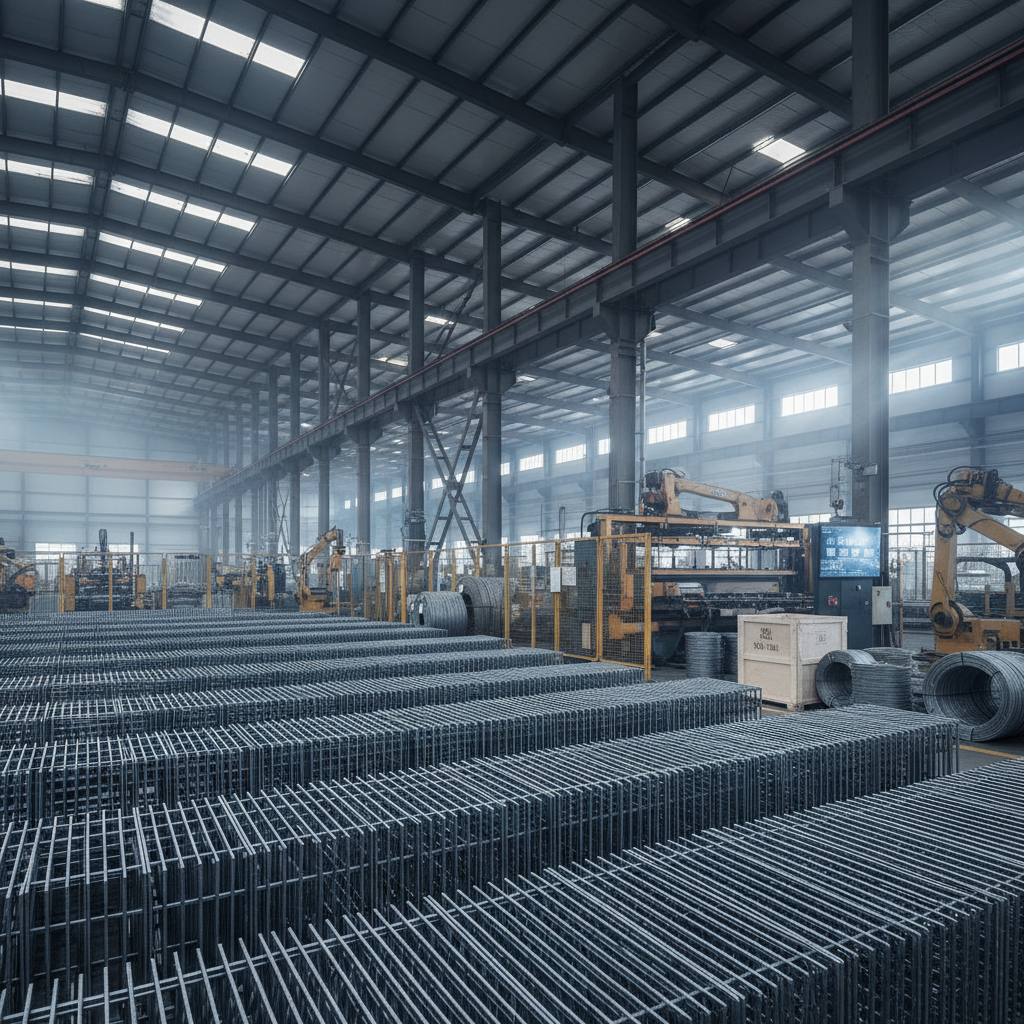
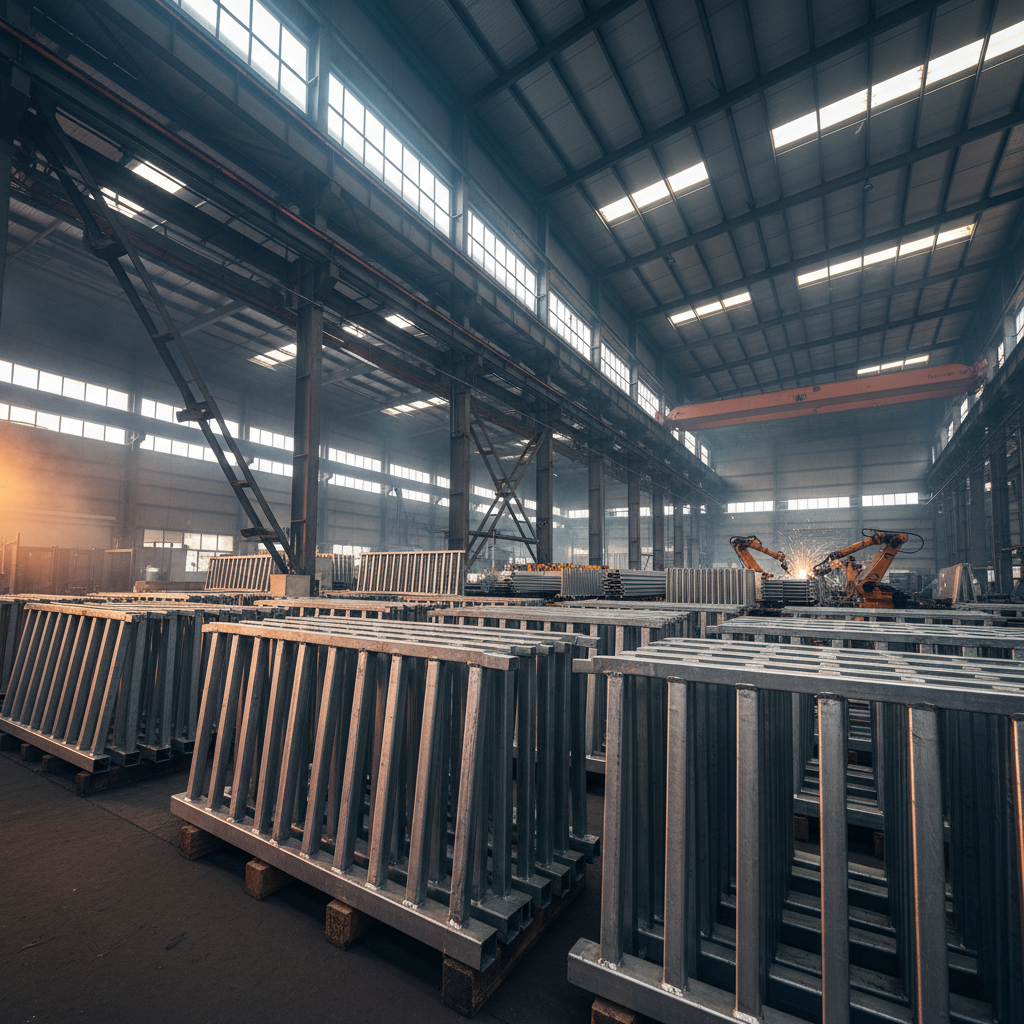
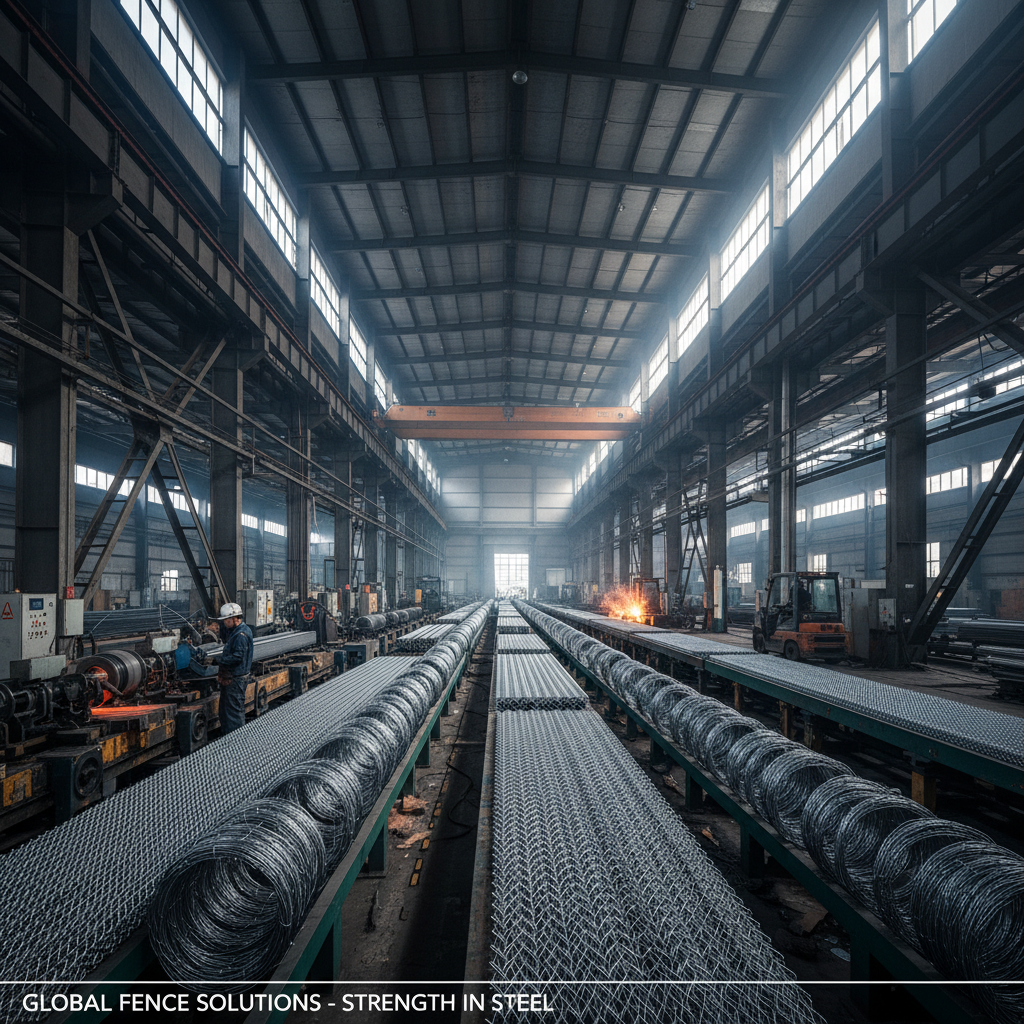
The established steel fencing manufacturers, the ones who’ve been around for decades, they’re shifting focus too. More automation, more pre-fabrication, trying to compete on speed and efficiency. They're starting to offer more customization options, which is good, but it also adds complexity.
Common Design Pitfalls in Steel Fencing
To be honest, there's a lot of over-engineering going on. People adding flourishes and decorative elements that just increase cost and make installation harder. Like, why put a fancy scrollwork design on a gate that’s going to be in a muddy farm field? It’s just asking for trouble. And the post designs... some of them are ridiculously complicated. Too many welds, too many potential failure points. Keep it simple, keep it strong. That’s my motto.
Another thing I’ve noticed is a lack of attention to drainage. If water gets trapped inside a fence post, it'll rust from the inside out. You need weep holes, proper coating, and a design that allows water to run off easily. Seems obvious, right? But you wouldn’t believe how many designs overlook this.
And don't even get me started on the connectors. Cheap connectors are the bane of my existence. They're the first thing to fail, and then you're dealing with a sagging fence and a very unhappy customer.
Materials and On-Site Handling
We primarily work with Q235 and Q345 steel for the structure. Q235 is good for most general fencing applications. It’s relatively easy to weld and form. Q345, that’s your high-strength stuff, you’d use it for gates, or areas that need extra support. It’s a bit harder to work with, requires more skilled welders.
The finish is critical. Galvanizing is the standard, but the quality varies wildly. Look for a thick, even coating. You can tell a good galvanization by the “spangle” – those little crystalline formations on the surface. It means the zinc has bonded properly with the steel. Powder coating is good for aesthetics, but remember what I said about prep work. And always handle the panels with care. Don't drag them across the ground, and protect the coating from scratches.
The smell of freshly cut galvanized steel… it’s distinctive. You get used to it. It clings to your clothes, your hands. And the feel of the steel itself – cool, solid, reassuring. You know you’re working with something durable, something that will last.
Real-World Testing and Quality Control
Forget the lab tests, okay? Those are useful for getting baseline numbers, but they don’t tell you how the fence will perform in real conditions. We do our testing on site. We put the panels through stress tests, lean on them, try to bend them (within reason, of course!). We check the welds for porosity and strength. We even simulate wind loads by tying ropes to the fence and pulling on them.
I once saw a fence buckle under the weight of a heavy snowfall. The design was flawed – too much weight on the top rail. That taught me a valuable lesson: always account for extreme weather conditions.
Steel Fencing Manufacturers Quality Assessment
User Applications and Unexpected Uses
People use these fences for everything. Security, privacy, livestock containment, property demarcation… you name it. But sometimes, they come up with uses you wouldn’t expect. I had a guy use it to create a makeshift climbing wall for his kids. Another one used it to build a retaining wall for a garden. It’s surprisingly versatile.
And they’re not always used in traditional ways. I saw a brewery use it to create a trellis for hops. Looked pretty good, actually. It’s always interesting to see how people adapt the material to their own needs.
Advantages, Disadvantages, and Customization Options
The biggest advantage, of course, is durability. Steel fencing will last for decades with minimal maintenance. It's also secure – much more so than wood or vinyl. And it's relatively affordable, especially compared to wrought iron.
But it’s not perfect. It can rust if it’s not properly protected. It can be expensive to install, especially if you need to dig post holes. And it can be… well, it's steel. It's not exactly the warmest or most inviting material.
Customization is becoming more common. We did a project last year where the customer wanted a specific powder coating color to match their branding. It was a pain to source, but we made it happen. And we’ve done a lot of custom gate designs, with different shapes, sizes, and ornamentation.
A Real-Life Customer Experience
Last month, that small boss in Shenzhen who makes smart home devices insisted on changing the interface to for the gate latch. Said it was more “future-proof.” I tried to explain to him that it was completely unnecessary, that a standard keyed latch was perfectly adequate. But he wouldn’t listen.
He wanted the latch to be remotely operated, controlled by his smart home system. It was a nightmare to integrate. Lots of custom wiring, a separate power supply, and a very complicated programming interface. It worked, eventually, but it was way over-engineered for a simple gate latch. He was happy, though. He likes to impress his clients with fancy gadgets.
The whole thing was a waste of time and money, if you ask me. But hey, the customer is always right, right?
Summary of Key Considerations for Steel Fencing Manufacturers
| Material Quality |
Design Complexity |
Installation Ease |
Long-Term Durability |
| High-grade steel (Q235/Q345) essential |
Avoid unnecessary ornamentation |
Pre-fabricated sections speed up process |
Galvanization and powder coating crucial |
| Thorough weld inspection is vital |
Prioritize functional design over aesthetics |
Clear installation instructions are key |
Regular maintenance extends lifespan |
| Check for proper zinc coating thickness |
Simplify connector design |
Consider ground conditions for post depth |
Proper drainage prevents internal rust |
| Supplier certifications are a must |
Test designs for wind and snow loads |
Minimize the number of on-site welds |
Choose corrosion-resistant hardware |
| Inspect for surface imperfections |
Account for potential future modifications |
Ensure compatibility with existing structures |
Consider environmental factors (salt air, etc.) |
| Conduct hardness tests on steel components |
Focus on secure connections and stability |
Provide adequate access for maintenance |
Invest in high-quality coatings and finishes |
FAQs
A properly galvanized and maintained steel fence can easily last 25-30 years, sometimes even longer. It really comes down to the environment and how well it’s cared for. Coastal areas with high salt content will require more frequent maintenance than inland areas. Regular inspections, cleaning, and touch-up paint jobs are crucial for extending its lifespan. I’ve seen fences older than me still standing strong, but they’ve definitely had some TLC over the years.
Initially, steel fencing is often more expensive than wood or vinyl. But you have to factor in long-term costs. Wood requires regular staining and replacement, while vinyl can become brittle and crack over time. Steel, if properly maintained, will last significantly longer, reducing replacement costs. It’s an investment, not just an expense. The price also depends on the complexity of the design, the thickness of the steel, and the type of coating.
Galvanization is the first line of defense, but it’s not foolproof. Any scratches or damage to the galvanization expose the steel to the elements. Regularly inspect the fence for scratches and touch them up with a zinc-rich primer and paint. Powder coating provides an additional layer of protection. Also, ensure proper drainage to prevent water from pooling inside the fence posts. And, honestly, just keeping it clean helps a lot.
Absolutely. That’s one of the biggest advantages of steel. It can be cut, welded, and shaped to almost any design. You can adjust the height, spacing between pickets, and add decorative elements. We’ve done everything from simple privacy screens to elaborate ornamental gates. However, complex designs will increase the cost and installation time.
Yes, but the design is critical. You need to ensure the fence is strong enough to withstand the weight of the snow and the force of the wind. Using thicker steel, reinforced posts, and proper bracing are essential. A well-designed steel fence can actually outperform other materials in extreme weather conditions. We always recommend consulting with a structural engineer for areas with particularly harsh climates.
The main maintenance tasks are inspecting for rust, touching up paint, and lubricating hinges and latches. Regular cleaning to remove dirt and debris is also important. For fences in coastal areas, you may need to wash them down with fresh water more frequently to remove salt deposits. Generally, a little bit of preventative maintenance can go a long way in extending the life of your fence.
Conclusion
So, yeah, steel fencing manufacturers, it’s not glamorous work. It’s hot, it’s dirty, and it’s often frustrating. But at the end of the day, you’re building something that lasts. Something that provides security, privacy, and peace of mind. And that’s something to be proud of.
Ultimately, whether this thing works or not, the worker will know the moment he tightens the screw. If it feels solid, if it looks right, you know it’s going to hold up. Because in the end, it’s not about the specs or the fancy designs. It’s about the quality of the materials, the skill of the workmanship, and a little bit of common sense. And maybe a good cup of coffee.