
Estimating the Cost of Chain Link Fence for 1/4 Acre
Securing a quarter-acre property requires a balance between budget, durability, and security. When calculating the cost of chain link fence for 1/4 acre, homeowners must consider various factors including the perimeter length, material gauge, and whether they choose professional installation or a DIY approach. Chain link fencing remains one of the most cost-effective solutions for large areas, offering long-term reliability without the high maintenance of wood or the expense of wrought iron. In this guide, we will break down the expenses to help you plan your project with precision.
Calculating the Total Perimeter for a Quarter Acre
Before diving into prices, it is essential to understand how much fencing you actually need. A 1/4 acre lot is approximately 10,890 square feet. However, the perimeter varies based on the shape of the lot. For a perfectly square lot, the dimensions would be roughly 104.3 feet per side, totaling about 417 linear feet. Many properties are rectangular, which may increase the perimeter slightly. Knowing your exact footage is the first step in determining the cost of chain link fence for 1/4 acre, as every extra foot adds to the material cost for fabric, top rails, and posts.
Material Options and Their Impact on Cost
The type of coating and the thickness (gauge) of the wire significantly influence the final price. Galvanized steel is the industry standard for rust prevention and is generally the most affordable. Black or Green PVC coating adds an aesthetic layer and extra protection against corrosion, though it typically increases the cost by 20% to 30%. For those prioritizing high security, a heavier gauge wire (lower number) will be more expensive but far more difficult to cut or breach. Choosing a reputable supplier like Fencing Wire Mesh ensures you get the right grade of steel for your specific environmental needs.
Pro Tip: Always account for a "waste factor" of 5-10% when ordering materials to cover cutting errors or unexpected terrain adjustments.
Detailed Price Breakdown for 1/4 Acre Fencing
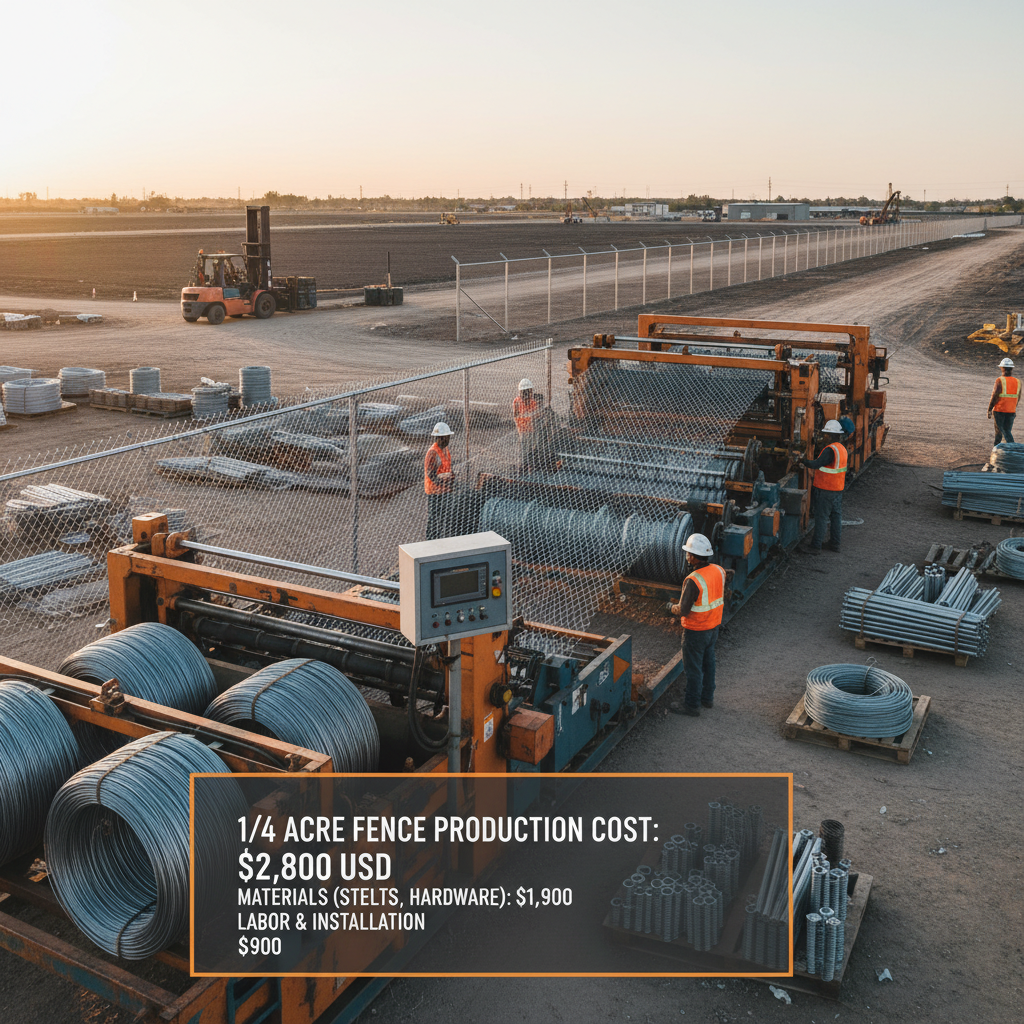
To give you a clear picture of the investment, we have categorized the costs into materials and labor. For a standard 417-linear-foot perimeter, the prices can fluctuate based on height (4ft vs 6ft). Below is a detailed estimate regarding the cost of chain link fence for 1/4 acre based on current market averages.
DIY vs. Professional Installation Cost Comparison
One of the most effective ways to lower the cost of chain link fence for 1/4 acre is to handle the installation yourself. While DIY saves you significantly on labor costs, it requires a substantial investment in time and a few specialized tools (like a post-hole digger and fence stretchers). Professional installers, on the other hand, provide a guarantee of straight lines, properly tensioned fabric, and secure posts, which prevents sagging over time.
Hidden Factors That Can Increase Your Budget
When budgeting for your fence, remember that the sticker price of the mesh is not the only expense. Terrain challenges, such as rocky soil or steep slopes, can increase labor hours and require more concrete. Permit fees vary by municipality and can add a few hundred dollars to your total. Additionally, if you require privacy slats to be inserted into the chain link for added seclusion, this will increase both the material cost and the installation time. Working with a specialist like Fencing Wire Mesh can help you identify the most efficient materials to keep these hidden costs in check.
Product Specifications for Standard Residential Fencing
To ensure you are comparing "apples to apples" when getting quotes, you need to understand the technical specifications. A standard residential fence for a quarter acre typically uses a 9-gauge or 11-gauge wire. The following table outlines the common specifications you will encounter when researching the cost of chain link fence for 1/4 acre.
Conclusion: Planning Your 1/4 Acre Fence Investment
Determining the cost of chain link fence for 1/4 acre involves balancing the linear footage of your property with your preference for materials and installation methods. While galvanized options offer the lowest entry price, PVC coatings provide enhanced longevity and aesthetics. Whether you choose the route of DIY savings or professional reliability, investing in high-quality materials from a trusted source like Fencing Wire Mesh ensures your property remains secure for decades to come.
Frequently Asked Questions (FAQs)
How much does a chain link fence typically cost per linear foot?
On average, the cost of materials for a residential chain link fence ranges from $4 to $12 per linear foot, depending on the height and coating. When you add professional installation, the cost typically rises to $15 to $30 per linear foot. For a 1/4 acre lot with roughly 417 feet of perimeter, this explains why the total project cost usually falls between $2,000 and $5,000. Factors such as the number of gates and the thickness of the wire will cause these numbers to shift.
Is PVC coated chain link worth the extra cost?
Yes, for many homeowners, PVC coating is worth the investment. Not only does it offer a more modern look that blends into the landscape (especially in black or green), but the plastic layer provides an additional barrier against moisture and salt. This significantly reduces the risk of rust and corrosion, especially in coastal areas or regions with heavy rainfall, thereby extending the overall lifespan of the fence and reducing long-term maintenance costs.
Can I install a chain link fence on a 1/4 acre lot by myself?
Absolutely. Installing a chain link fence is a popular DIY project. To succeed, you will need to accurately mark your property lines, dig holes for the posts, set them in concrete, and use a fence stretcher to pull the fabric tight. While this saves you the cost of professional labor, it is physically demanding work. If your land is very uneven or if you have very rocky soil, you might find that hiring a professional is more efficient and ensures a higher quality finish.
What is the best gauge of wire for a residential fence?
For most residential properties, 11.5 gauge wire is the standard and provides a great balance between cost and strength. If you have large dogs or need higher security for your 1/4 acre lot, upgrading to 9 gauge wire is recommended. The lower the gauge number, the thicker the wire. While 9 gauge is more expensive, it is significantly more durable and resistant to bending or cutting, making it an ideal choice for those prioritizing maximum security.