
Strategic Imperatives for High-Security Perimeter Solutions
In an era where infrastructure security is paramount, the selection of robust perimeter deterrents is a critical decision for B2B stakeholders. High-quality barbed wire solutions, particularly those engineered from advanced materials like stainless steel, offer indispensable protection against unauthorized access and intrusion. This comprehensive guide delves into the technical, operational, and strategic aspects of modern barbed wire systems, providing actionable insights for procurement professionals, engineers, and facility managers across diverse industrial sectors. We will explore the manufacturing intricacies, material science, application versatility, and key considerations for deploying these essential security assets.
The Manufacturing Process: Precision Engineering of Stainless Steel Razor Barbed Wire
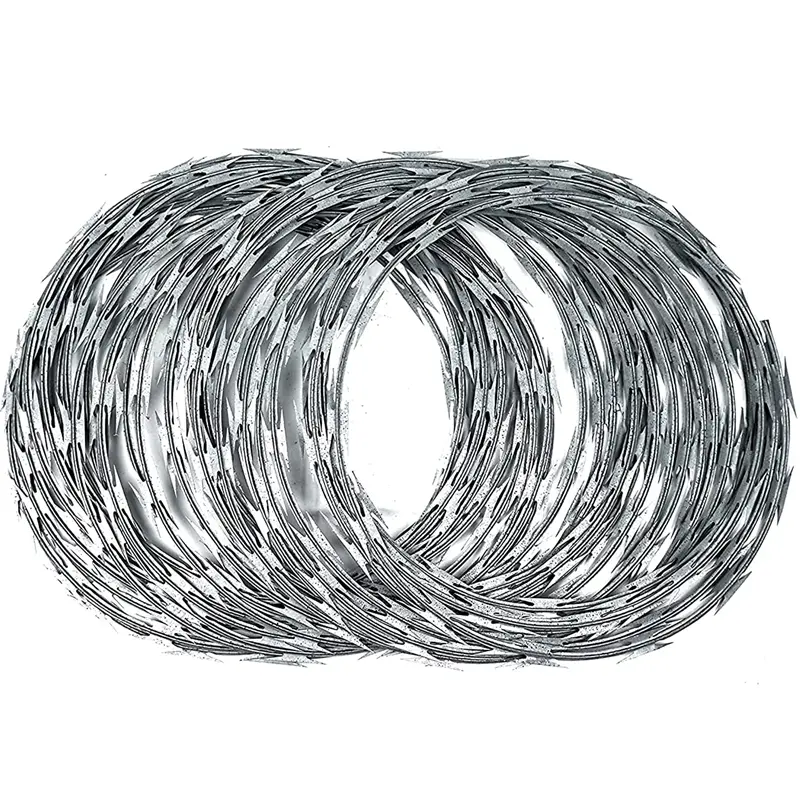
The production of high-performance barbed wire, especially the razor wire variant, is a multi-stage process demanding stringent quality control and precision engineering. Unlike traditional iron barbed wire, modern stainless steel razor wire incorporates a central core wire surrounded by sharp-edged steel blades. This enhanced design significantly increases its deterrent capability and lifespan.
Detailed Process Flow:
- Material Selection & Preparation: The foundation is high-grade stainless steel wire, typically 304 or 316. These alloys are chosen for their superior corrosion resistance, high tensile strength, and durability. Raw wire coils undergo rigorous inspection for metallurgical composition and surface integrity. Similarly, stainless steel sheets for razor blades are selected based on precise gauge and alloy specifications.
- Wire Drawing: The selected stainless steel wire rods are drawn through a series of dies to achieve the desired core wire diameter, ensuring uniformity and specified tensile strength. This mechanical process refines the wire's structure, enhancing its physical properties.
- Blade Stamping & Forming: Stainless steel sheets are fed into specialized CNC-controlled stamping machines. These machines precisely cut and form the razor blades (e.g., BTO-22, CBT-65 patterns). The accuracy of this process is critical for consistent blade sharpness and shape, maximizing deterrent efficacy.
- Assembly (Crimping/Cladding): The stamped razor blades are then mechanically crimped or cold-welded onto the high-tensile core wire. This ensures a secure, robust bond that prevents detachment even under significant stress or attempts at cutting. The integrity of this bond is paramount for the effectiveness of the razor barbed wire.
- Coiling and Packaging: The assembled razor wire is then coiled into various configurations such as concertina coils (helical or single coil), straight line, or flat wrap, depending on application requirements. These coils are typically compressed and secured with clips, then packaged for protection during transit.
- Quality Control & Testing Standards: Throughout the process, adherence to international standards like ISO 9001 for quality management and ASTM A641/A641M for zinc-coated wire or equivalent for stainless steel is maintained. This includes visual inspection, tensile strength testing, blade sharpness tests, and corrosion resistance evaluations. These rigorous checks ensure the product meets specified performance parameters, offering a long service life and exceptional corrosion resistance, crucial for industries like petrochemical and water supply & drainage.
Technical Specifications & Material Advantages
The efficacy of high-security barbed wire is intrinsically linked to its technical specifications and the advanced materials used in its construction. Stainless steel razor wire, particularly grades 304 and 316, represents the pinnacle of anti-intrusion technology, offering unparalleled longevity and performance.
Key Technical Parameters:
- Material Composition: 304 or 316 Stainless Steel (Razor blades and core wire).
- Core Wire Diameter: Typically ranges from 2.5mm to 3.0mm, influencing overall strength.
- Blade Thickness: Ranges from 0.5mm to 0.6mm, contributing to cutting resistance.
- Blade Length & Width: Varies by pattern (e.g., BTO-22: 22mm blade length; CBT-65: 65mm blade length), dictating deterrent effectiveness.
- Coil Diameter: Common diameters include 450mm, 600mm, 750mm, 900mm, and 1000mm, influencing coverage area.
- Number of Loops per Coil: Ranges from 33 to 56 loops, affecting density and security level.
Product Specification Table: Security Protected Stainless Steel Razor Barbed Wire
The selection of 304 or 316 stainless steel is pivotal. While 304 offers excellent corrosion resistance and strength for most environments, 316 stainless steel, with its added molybdenum content, provides enhanced resistance to chlorides and other aggressive industrial pollutants. This makes 316 particularly suitable for coastal regions, chemical processing plants, and environments prone to acid rain, significantly extending service life and reducing maintenance costs.
Industry Trends and Market Dynamics
The global security fencing market, valued at approximately USD 2.5 billion in 2022, is projected to grow at a CAGR of over 5% from 2023 to 2030, driven by increasing geopolitical instability, rising industrial theft, and enhanced regulatory compliance requirements for critical infrastructure. Within this landscape, the demand for advanced barbed wire solutions, specifically stainless steel razor wire, is experiencing significant upward momentum.
Key Trends Shaping the Market:
- Shift Towards Durable Materials: There's a pronounced move away from traditional galvanized steel or iron barbed wire towards stainless steel. This is primarily due to the superior corrosion resistance, longer lifespan (up to 25 years for stainless steel vs. 5-10 years for galvanized), and reduced total cost of ownership that stainless steel offers.
- Integration with Advanced Security Systems: Modern perimeter solutions are increasingly integrated with surveillance cameras, motion sensors, and access control systems. Razor wire acts as the first line of defense, deterring initial breach attempts and allowing time for electronic systems to respond.
- Customization and Configuration Flexibility: Clients now seek customized razor wire configurations (e.g., specific blade types, coil diameters, flat wrap designs) to meet site-specific security threats and aesthetic requirements. This demand fosters innovation in product design and manufacturing capabilities.
- Growing Demand for "Buy Barbed Wire" Online: E-commerce platforms and digital marketplaces are simplifying the procurement process for businesses looking to buy barbed wire, particularly for standardized products or urgent requirements, driving increased accessibility and competition.
Application Scenarios and Case Studies
The versatility and high deterrent factor of stainless steel razor barbed wire make it an ideal choice for a multitude of high-security applications across critical industries. Its robust construction and formidable design provide superior perimeter protection where conventional fencing falls short.
Key Application Scenarios:
- Petrochemical Facilities: Refineries, chemical plants, and oil & gas terminals require impenetrable perimeters to protect hazardous materials and prevent industrial espionage. Stainless steel razor wire provides essential anti-climb capabilities and corrosion resistance against chemical vapors.
- Metallurgical Plants: Steel mills, smelters, and foundries benefit from robust security to safeguard valuable raw materials and finished products, deterring theft and ensuring operational continuity.
- Water Supply & Drainage Infrastructure: Critical water treatment plants, reservoirs, and pumping stations must be secured against sabotage or contamination attempts. The corrosion resistance of stainless steel ensures long-term integrity in moist environments.
- Government & Military Installations: High-security government buildings, military bases, and correctional facilities frequently employ razor wire for its formidable deterrent and containment capabilities.
- Commercial & Industrial Security: Warehouses, logistics centers, data centers, and manufacturing plants utilize razor wire to protect high-value assets and intellectual property.
Case Study: Enhanced Security at a Major Logistics Hub
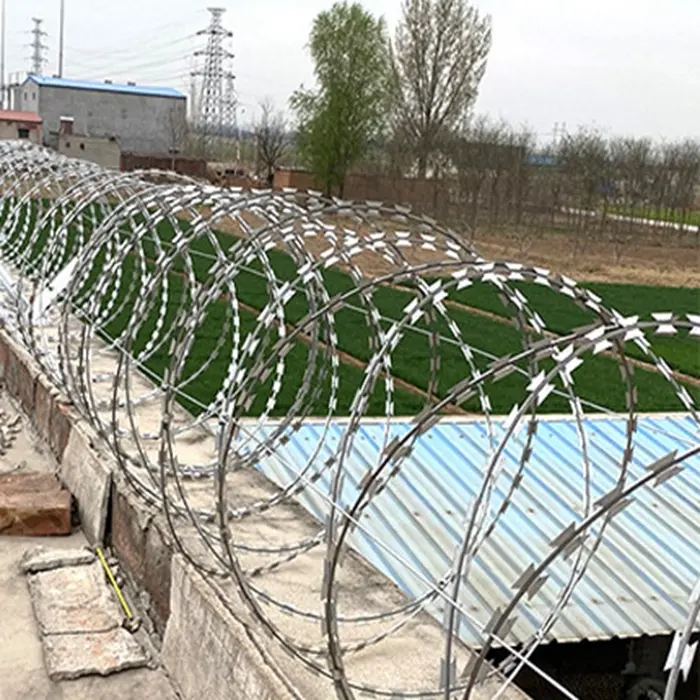
A leading global logistics provider faced recurring perimeter breaches at its main distribution center, resulting in significant inventory loss. After a comprehensive security audit, the decision was made to upgrade the entire perimeter. The existing fencing was reinforced with concertina-style 304 stainless steel razor barbed wire coils. The installation involved attaching the razor wire to the top of existing chain-link fences and extending it over gates.

Results: Within six months of installation, recorded intrusion attempts dropped by 85%. The highly visible and formidable nature of the razor wire served as a significant psychological and physical deterrent. The 304 stainless steel ensured minimal maintenance despite harsh weather, projecting a long-term, cost-effective security solution. This investment not only protected assets but also restored operational confidence.
Comparative Analysis: Choosing the Right Barbed Wire Solution
When considering perimeter security, decision-makers often weigh various options. A direct comparison highlights why stainless steel razor barbed wire is a superior investment compared to traditional options, especially when factors like lifespan, maintenance, and ultimate security are prioritized.
Razor Wire vs. Traditional Barbed Wire:
This comparison underscores the strategic advantage of investing in stainless steel razor wire. While the initial procurement cost might be higher than that of basic iron barbed wire, the extended service life, reduced maintenance, and superior security performance translate into a significantly lower total cost of ownership and enhanced operational safety over the long term. This is a critical consideration for enterprises looking to buy barbed wire as a sustainable security solution.
Customized Solutions and Engineering Support
Recognizing that no two security challenges are identical, leading manufacturers offer bespoke stainless steel razor barbed wire solutions. These tailored approaches ensure optimal security configurations that integrate seamlessly with existing infrastructure and address specific threat profiles.
Our Customization Capabilities Include:
- Material Grade Selection: Expert consultation on 304 vs. 316 stainless steel based on environmental corrosivity and budget.
- Blade Pattern & Density: Matching blade types (e.g., BTO-22, CBT-65) and spacing to achieve desired deterrent effect.
- Coil Configuration: Providing concertina (single or helical), flat wrap, or straight-line razor wire to fit specific fence heights, wall toppings, or ground installations.
- Integrated Solutions: Advising on the seamless integration of razor wire with mesh fencing, wall spikes, and electronic surveillance systems.
- Project-Specific Design: Offering CAD drawings and technical specifications for large-scale projects, ensuring precise material estimates and installation plans.
Our team of engineering specialists works closely with clients from initial consultation through to deployment, ensuring that every solution is optimally designed for maximum security and operational efficiency.
Ensuring Reliability: Certifications, Warranty, and Support
For B2B buyers, confidence in product quality and supplier reliability is non-negotiable. Our commitment to excellence is underpinned by comprehensive certifications, transparent warranty policies, and dedicated customer support, ensuring peace of mind for every perimeter security project.
Authoritativeness & Trustworthiness:
- Industry Certifications: Our manufacturing processes adhere to international quality management standards, including ISO 9001:2015, ensuring consistent product quality from raw material to finished goods. Our materials comply with relevant ASTM standards for stainless steel and wire products, verifying composition and mechanical properties.
- Proven Track Record: With over 15 years in the security fencing industry, we have cultivated a reputation for reliability and innovation. Our long-standing partnerships with leading contractors, government agencies, and industrial giants speak to our consistent performance and trusted expertise.
- Rigorous Testing Data: Each batch of stainless steel razor barbed wire undergoes internal and third-party testing for tensile strength, corrosion resistance (e.g., salt spray tests to ASTM B117 standards), and blade integrity. Detailed test reports are available upon request to validate product performance.
- Comprehensive Warranty: We stand behind our products with a robust warranty, typically offering a 10-year guarantee against manufacturing defects and premature corrosion for our 304 SS razor wire, and an extended 15-year warranty for 316 SS variants under normal environmental conditions. Specific terms are provided with each quotation.
- Dedicated After-Sales Support: Our customer support team is available to assist with technical queries, installation guidance, and any post-purchase requirements. We provide comprehensive documentation, including installation manuals and safety guidelines, to ensure proper and secure deployment of our products.

Frequently Asked Questions (FAQ)
Q1: What is the primary advantage of stainless steel razor barbed wire over traditional galvanized options?
The main advantage is significantly superior corrosion resistance and a much longer service life. Stainless steel, especially 316 grade, can withstand harsh environments, including coastal areas and industrial pollutants, for 15-25+ years without rusting, whereas galvanized steel typically lasts 5-10 years before requiring replacement or significant maintenance. This translates to lower total cost of ownership (TCO) and consistent high-level security.
Q2: What are the typical lead times for bulk orders of razor barbed wire?
Lead times can vary based on order volume, customization requirements, and current production schedules. For standard specifications, typical lead times range from 2 to 4 weeks for production. Shipping transit times are additional and depend on the destination. We recommend consulting directly with our sales team for precise lead time estimates for your specific barbed wire order.
Q3: Can razor barbed wire be installed on existing fencing?
Yes, stainless steel razor wire is highly versatile and can be effectively installed on top of existing fences, walls, gates, or as a standalone barrier. Common installation methods include using Y-arms or L-brackets to extend the height of the existing structure, providing an enhanced anti-climb deterrent. Our technical team can provide detailed installation guides and support.

Lead Time and Fulfillment
Understanding the critical timelines associated with B2B procurement, especially for security infrastructure, we optimize our production and logistics to ensure efficient fulfillment. Our standard lead time for most stainless steel razor barbed wire orders is typically 2-4 weeks from order confirmation, subject to stock availability and order volume. For highly customized or exceptionally large orders, a project-specific timeline will be provided during the quotation phase. We utilize established global logistics networks to ensure timely and secure delivery to your specified location, with options for expedited shipping available upon request. Our fulfillment process includes rigorous quality checks before dispatch, ensuring that products arrive as specified and ready for deployment.
Conclusion: A Strategic Investment in Perimeter Security
The choice of perimeter security solution is a long-term strategic investment impacting operational integrity, asset protection, and personnel safety. Stainless steel razor barbed wire offers a superior, durable, and highly effective deterrent against unauthorized access, significantly outperforming traditional alternatives. By focusing on advanced materials, precise manufacturing, and adherence to international standards, we provide solutions that not only meet but exceed the rigorous demands of modern B2B security landscapes. For businesses looking to enhance their perimeter defenses with a reliable, low-maintenance, and long-lasting security asset, investing in high-quality stainless steel razor barbed wire is a clear and defensible decision.
References
- ISO 9001:2015 Quality Management Systems – Requirements. International Organization for Standardization.
- ASTM A641/A641M - 09(2014) Standard Specification for Zinc–Coated (Galvanized) Carbon Steel Wire. ASTM International.
- ASTM B117 - 19 Standard Practice for Operating Salt Spray (Fog) Apparatus. ASTM International.
- "Global Security Fencing Market Outlook 2023-2030." Market research report, various publishers.
- "Stainless Steel Handbook: Properties, Selection, and Applications." ASM International.